
Best Car Insurance for New Drivers: Costs & Savings

Best Car Insurance for New Drivers: Coverage, Costs, and Savings Explained Finding the best car insurance for new drivers can feel challenging, especially when you are purchasing auto insurance for the first time. Between coverage options, monthly premiums, deductibles, and available discounts, understanding what you actually need is not always straightforward. New drivers often face higher insurance costs because they have limited driving experience. However, being new to driving does not mean you have to choose an expensive policy or settle for inadequate protection. The right auto insurance should provide suitable coverage, meet your state’s requirements, and fit your budget. More importantly, it should help protect you financially if an accident occurs. Whether you are a teenager getting your first license, a parent insuring a young driver, or an adult learning to drive later in life, this guide explains how to compare coverage, understand costs, and find opportunities to save. At HHAS Insurance Services Inc., drivers can explore auto insurance information and request a quote based on their coverage needs. What Makes the Best Car Insurance for New Drivers? The best car insurance for new drivers is not necessarily the policy with the lowest monthly payment. Instead, it is coverage that balances affordability, financial protection, and the driver’s individual circumstances. For example, a teenager driving a family-owned vehicle may have different insurance needs from an adult financing a new car. Likewise, someone driving an older vehicle may choose different physical damage coverage than a driver with a newer, more expensive vehicle. Before selecting a policy, consider these important factors: Although price matters, choosing insufficient coverage could leave you responsible for substantial expenses after an accident. Therefore, compare both the cost and the protection offered before making a decision. What Does Car Insurance for New Drivers Cover? Understanding the different types of auto insurance is one of the most important steps for first-time drivers. Some coverages are required by state law, while others are optional or may be required by a lender. According to the National Association of Insurance Commissioners (NAIC), auto insurance policies contain different types of protection, and coverage requirements vary by state. Liability Insurance Liability insurance helps pay for certain injuries or property damage you cause to other people in an accident. It generally includes two main categories. Bodily Injury Liability This coverage helps pay for qualifying injuries to other people when you are legally responsible for an accident. Depending on the policy, it may cover eligible medical expenses, legal defense costs, and damages. Property Damage Liability This coverage helps pay for qualifying damage you cause to someone else’s vehicle or property. For example, if you accidentally hit another driver’s parked car, property damage liability may help cover the resulting damage. However, liability insurance generally does not pay to repair your own vehicle. Collision Coverage Collision insurance helps pay for covered damage to your vehicle resulting from a collision with another vehicle or object. For example, if a new driver accidentally hits a guardrail, collision coverage may help pay for repairs after the applicable deductible. This coverage is particularly important to consider when driving a newer or financed vehicle. Comprehensive Coverage Comprehensive insurance covers certain types of vehicle damage that do not result from a collision. Depending on the policy, examples may include: Although comprehensive coverage is generally optional under state insurance laws, lenders may require it when a vehicle is financed. Uninsured and Underinsured Motorist Coverage Uninsured motorist coverage may help protect you if an uninsured driver causes a qualifying accident. Meanwhile, underinsured motorist coverage can provide protection when an at-fault driver’s liability insurance is insufficient to cover an eligible loss. Coverage rules, limits, and availability vary by state. Therefore, review these options carefully rather than assuming every policy includes the same benefits. Medical Payments and Personal Injury Protection Medical Payments coverage and Personal Injury Protection (PIP) can help pay certain accident-related medical expenses. Depending on the state and policy, PIP may also cover eligible lost wages or other expenses. However, these coverages have different rules and are not interchangeable in every state. Optional Auto Insurance Benefits Some insurers also offer additional protection, including roadside assistance and rental reimbursement. Other options may include gap coverage, which can help address certain differences between a vehicle’s covered total-loss settlement and its outstanding loan or lease balance. Gap coverage may be offered separately and is subject to its own terms. You can explore these coverage categories through HHAS Auto Insurance. Best Car Insurance for New Drivers: Liability vs. Full Coverage One of the biggest decisions new drivers face is whether to purchase liability-only insurance or broader coverage. Liability-only insurance generally focuses on covered injuries and property damage you cause to others. In contrast, the term full coverage commonly refers to a policy that combines liability, collision, and comprehensive coverage. However, full coverage is not a standardized insurance product. It does not mean every possible loss is covered. Coverage Feature Liability-Only Policy Common Full-Coverage Combination Injury liability to others Included Included Property damage liability to others Included Included Collision damage to your vehicle Generally not included Usually included Comprehensive damage to your vehicle Generally not included Usually included Uninsured motorist coverage Depends on state and policy Depends on state and policy Monthly premium Often lower Often higher Lender requirements May be insufficient Often includes required physical damage coverage For example, a driver with an older, fully paid-off vehicle may decide that liability-only coverage fits their financial situation. However, someone financing a newer car will generally need collision and comprehensive coverage to satisfy lender requirements. Before choosing either option, consider the vehicle’s value, your savings, your ability to pay for repairs, and your exposure to liability claims. What Is the Average Cost of Car Insurance for New Drivers? The average cost of car insurance for new drivers depends on several factors, including age, location, driving experience, vehicle type, and coverage selections. As a result, there is no single monthly premium that accurately represents every first-time driver in the United States. The
Contractor Liability Insurance: Coverage & Costs
Contractor Liability Insurance: Coverage, Costs, and Requirements Explained Contractor liability insurance helps protect construction professionals and independent contractors from financial losses caused by certain accidents, property damage, and liability claims. Whether you operate a construction company, work as an independent contractor, or manage several subcontractors, understanding this coverage is an important part of protecting your business. Every construction project involves risks. A customer could suffer an injury at a job site, equipment could accidentally damage someone else’s property, or a completed project could lead to a liability claim. Without appropriate insurance, these situations can create significant financial challenges. However, choosing the right policy involves more than finding the lowest premium. Contractors must also consider coverage limits, exclusions, business activities, and insurance requirements that may apply to their projects. This guide explains what contractor liability insurance covers, what affects its cost, which requirements may apply, and how to compare coverage options in the United States. What Is Contractor Liability Insurance? Contractor liability insurance generally refers to commercial general liability insurance designed for businesses performing construction, installation, maintenance, repair, or related services. Its main purpose is to help protect contractors against certain third-party claims involving bodily injury, property damage, and personal or advertising injury. For example, imagine a remodeling contractor accidentally damages a customer’s expensive flooring while installing kitchen cabinets. If the damage qualifies under the policy, general liability insurance may help cover the resulting claim. Similarly, coverage may respond if a visitor suffers an injury caused by a covered accident involving the contractor’s operations. However, policies contain limits, conditions, and exclusions. Therefore, coverage is not automatic simply because an accident occurs during construction. According to the U.S. Small Business Administration, general liability insurance is one of the common types of business coverage used to address financial risks involving injuries, property damage, and lawsuits. Contractors can also explore business insurance options through HHAS Insurance to better understand the different types of commercial protection. What Does Contractor Liability Insurance Cover? A contractor’s general liability policy typically addresses several categories of third-party risk. However, the exact protection depends on the policy wording, endorsements, and circumstances of the claim. Third-Party Bodily Injury Construction sites and service locations can present hazards to customers, visitors, and other members of the public. For example, a customer might trip over a contractor’s unsecured extension cord and suffer an injury. If the incident qualifies as a covered claim, liability insurance may help pay eligible medical expenses, legal defense costs, or damages. However, general liability insurance generally does not replace workers’ compensation coverage for injuries sustained by employees during their work. Third-Party Property Damage Contractors frequently work around property belonging to customers and other businesses. As a result, accidental damage can occur even when appropriate precautions are taken. Consider a plumbing contractor who accidentally damages a homeowner’s countertop while installing a fixture. Depending on the policy and circumstances, general liability insurance may help address the resulting property damage claim. However, damage to property in the contractor’s care, custody, or control may be subject to exclusions or restrictions. Personal and Advertising Injury Some general liability policies also provide protection against certain personal and advertising injury claims. Examples may include covered allegations involving libel, slander, or particular advertising-related offenses. Although these risks may be less common for construction businesses, they can still arise during normal business activities. Coverage depends on the policy’s definitions and exclusions. Products and Completed Operations Liability risks do not necessarily end when a contractor finishes a project. For example, an installation problem discovered after completion could lead to damage to other property. Products-completed operations coverage may respond to certain qualifying bodily injury or property damage claims arising from completed work. However, it generally does not function as a warranty for defective workmanship. Therefore, contractors should carefully review completed operations provisions, exclusions, and coverage limits. Legal Defense Expenses A liability claim can involve legal expenses even when responsibility is disputed. Depending on the policy, insurance may provide a defense against covered lawsuits and pay eligible settlements or judgments. However, defense arrangements and limits vary. Some policies treat defense expenses differently from others. For that reason, understanding how legal costs affect available coverage is essential. What Does Contractor Liability Insurance Not Cover? Although general liability insurance offers important protection, it does not cover every business risk. Common exclusions or coverage gaps can include: For example, if a contractor installs flooring incorrectly, a general liability policy may not pay to remove and replace the defective flooring. However, if faulty work causes damage to other property, some resulting losses may qualify for coverage depending on the circumstances and exclusions. Consequently, contractors should review their policies carefully rather than assuming every construction-related problem is covered. Who Needs Contractor Liability Insurance? Many types of construction and service businesses can benefit from liability coverage. However, the appropriate policy depends on the contractor’s trade, business structure, and project responsibilities. General Contractor Liability Insurance General contractors often oversee entire construction or renovation projects. Their responsibilities may include coordinating subcontractors, supervising work, communicating with property owners, and managing job-site activities. Because several parties may participate in a project, liability exposures can become complicated. General contractor liability insurance can help address certain third-party claims involving covered injuries or property damage. However, general contractors should also review subcontractor insurance requirements, additional insured provisions, and completed operations coverage. Independent Contractor Liability Insurance Independent contractors may operate without employees or maintain only a small business. Nevertheless, working independently does not eliminate liability risks. For example, a self-employed handyman could accidentally damage a customer’s property while performing repairs. Independent contractor liability insurance may help protect against qualifying claims arising from these business activities. Additionally, some customers or commercial clients may require proof of insurance before awarding work. HVAC Contractor Liability Insurance Heating, ventilation, and air conditioning contractors work with equipment, electrical connections, refrigerants, and building systems. These activities can create specialized liability exposures. For example, an installation accident might damage a customer’s ceiling or surrounding property. HVAC contractor liability insurance can help address
Best Dental Insurance for Families: Costs & Coverage
Best Dental Insurance for Families: Coverage, Costs, and Benefits Finding the best dental insurance for families means choosing coverage that protects both adults and children without placing unnecessary pressure on your household budget. However, with different plan types, premiums, deductibles, and coverage limits, knowing which option offers the most value can feel overwhelming. Family dental insurance can help reduce eligible costs for routine checkups, cleanings, fillings, and other dental treatments. Still, not every policy covers the same services, and some plans have waiting periods or restrictions on more expensive procedures. Whether you have young children, teenagers, or a growing household, understanding dental insurance costs, benefits, and coverage options can help you make a confident decision. At HHAS Insurance, families can explore dental insurance options based on their coverage needs and budget. What Makes the Best Dental Insurance for Families? The best family dental plan is not always the one with the lowest monthly premium. Instead, it should provide suitable benefits for the dental care your household is likely to need. For example, a family with young children may prioritize preventive visits and access to pediatric dentists. Meanwhile, parents with teenagers may want to review orthodontic benefits and treatment limits. Before choosing a policy, consider several important features: Because every family has different needs, comparing these features is more useful than choosing a plan based only on advertising or price. What Does Family Dental Insurance Cover? Family dental insurance generally helps pay for certain dental services, although coverage depends on the insurer and policy. Most plans organize benefits into categories based on the type of treatment. Preventive Dental Care Preventive care focuses on maintaining oral health and identifying problems early. Depending on the plan, covered services may include routine examinations, professional cleanings, and certain dental X-rays. Some policies cover eligible preventive services without a deductible or with little out-of-pocket expense when you visit an in-network dentist. However, frequency limits and other conditions may apply. Therefore, families should review how many preventive visits each member can receive during the coverage period. Basic Dental Procedures Basic services commonly include treatments such as fillings and certain tooth extractions. A plan may cover part of the cost while requiring the patient to pay a deductible, copayment, or coinsurance. For instance, a family with children who occasionally need fillings may benefit from comparing the cost-sharing rules for basic dental treatment. However, the percentage paid by the insurer can vary significantly between policies. Major Dental Treatments Major dental services can include crowns, bridges, dentures, and certain other procedures. These treatments may involve higher out-of-pocket costs. In addition, some plans apply waiting periods, annual benefit limits, or exclusions. Dental implants are not automatically covered under every policy. Consequently, anyone expecting major dental treatment should review the plan’s specific benefits before enrolling. Orthodontic Benefits Braces and other orthodontic treatments are an important consideration for families with children or teenagers. However, not all dental insurance plans include orthodontic coverage. Even when a policy offers these benefits, it may have age restrictions, waiting periods, lifetime maximums, or other limitations. Before selecting coverage, confirm whether the policy includes the type of orthodontic treatment your family may need. Best Dental Insurance for Families With Kids Finding the best dental insurance for families with kids requires more than checking the monthly price. Children’s dental needs can change as they grow. Younger children may need routine examinations and preventive services, while teenagers may require more complex treatment. Therefore, parents should review whether a plan includes pediatric dentists, preventive services, basic procedures, and any relevant orthodontic benefits. The Health Insurance Marketplace’s dental coverage guidance explains that pediatric dental coverage is an essential health benefit under Marketplace rules. For children age 18 or younger, dental coverage must be available through a health plan or a separate dental plan. However, families are not required to purchase that coverage simply because it is available. Adult dental benefits follow different rules, so parents should not assume their own dental coverage matches their children’s benefits. In 2026, families comparing plans should pay particular attention to pediatric provider networks, cost-sharing rules, and coverage restrictions. Types of Dental Insurance Plans for Families Understanding the different types of dental insurance can make the selection process easier. HHAS Insurance explains three common dental plan structures: PPO, DHMO, and indemnity coverage. Plan Type Main Advantage What to Consider Dental PPO Greater flexibility to use participating and nonparticipating dentists Out-of-network care may cost more Dental DHMO Structured provider network and potentially lower costs for certain services Provider choice may be more limited Dental Indemnity Greater freedom to select dentists, depending on policy terms Reimbursement rules and out-of-pocket expenses may vary Dental PPO Plans A Preferred Provider Organization (PPO) plan allows members to receive care from participating dentists and, depending on the policy, nonparticipating providers. However, using an out-of-network dentist can result in higher expenses. Families who want greater flexibility when choosing dental providers may find PPO coverage worth considering. Dental DHMO Plans A Dental Health Maintenance Organization (DHMO) generally uses a defined network of participating dentists. These plans may offer predictable costs for certain services. However, members often have less flexibility when selecting providers. For families comfortable using participating dentists, a DHMO may be an option worth comparing. Dental Indemnity Plans Indemnity plans may allow greater freedom when choosing a dentist. However, reimbursement depends on the policy, and members may need to pay part of the treatment cost themselves. Before selecting this type of coverage, review deductibles, reimbursement percentages, annual limits, and any waiting periods. You can learn more about these plan structures through HHAS Dental Insurance. How Much Does Dental Insurance for Families Cost? Family dental insurance costs vary based on the policy, location, number of covered members, and benefits selected. There is no single monthly premium that applies to every American household. Several factors can affect the total cost: Although monthly premiums matter, families should also calculate their expected out-of-pocket expenses. Understanding the Total Annual Cost Consider two hypothetical family dental plans. Plan A
Disability Insurance for Self Employed: Costs & Benefits
Disability Insurance for Self Employed: Coverage, Costs, and Benefits For people who work for themselves, income often depends on their ability to keep working. An illness or injury that prevents you from doing your job can therefore create financial pressure quickly. Disability insurance for self employed professionals can help replace part of their earned income when a qualifying disability prevents them from working. Traditional employees may receive disability benefits through an employer. However, freelancers, independent contractors, consultants, and business owners often need to arrange their own protection. HHAS Insurance specifically notes that self-employed individuals may purchase individual disability insurance. hhasinsurance.com Understanding how coverage works, what affects its cost, and how short-term and long-term options differ can help you choose protection that fits your financial situation. IMAGE PLACEMENT: Insert your featured image here in WordPress and use this exact alt text: Alt Text: disability insurance for self employed coverage costs and benefits What Is Disability Insurance for Self Employed Workers? Disability insurance helps protect earned income when a covered illness or injury prevents you from working according to the terms of your policy. That protection can be especially valuable when you work independently. If your business depends heavily on your personal skills or daily involvement, losing the ability to work may also mean losing a significant part of your income. HHAS describes disability insurance as a form of income protection and states that self-employed individuals who want disability coverage may purchase individual policies. The company also explains that premiums and available benefits can vary based on factors such as occupation, location, benefit amount, benefit period, and how quickly benefits begin. hhasinsurance.com You can learn more through the HHAS Disability Insurance page. Why Self-Employed Workers May Need Disability Insurance Working for yourself provides independence, but it can also place more financial responsibility on you. For example, imagine an independent contractor who cannot work for several months after a qualifying injury. Client work may stop, while mortgage payments, utilities, food, transportation, and other expenses continue. A consultant could face a similar problem after a serious illness. Even if the business has low overhead, personal income may decline when the owner cannot provide services. As a result, disability coverage can become an important part of an income-protection strategy. The key question is simple: How long could you maintain your normal financial obligations if your earned income suddenly stopped? Your answer can help determine whether disability insurance deserves a place in your broader financial plan. Short Term Disability Insurance for Self Employed Professionals Short term disability insurance for self employed workers focuses on temporary periods when a qualifying disability prevents someone from working. Specific terms vary among policies. Therefore, you should review the waiting period, monthly benefit, benefit duration, exclusions, and definition of disability before choosing coverage. Someone with limited emergency savings, for instance, may be especially concerned about a shorter interruption in income. Another person may have enough savings to cover several months and may place greater priority on protection against a longer disability. Because financial situations differ, short-term coverage should be evaluated according to your actual needs rather than simply its premium. Long Term Disability Insurance for Self Employed Professionals Long term disability insurance for self employed workers addresses the financial risk of a disability that continues for an extended period. A long absence from work can create a different financial challenge from a temporary interruption. Savings that can cover several weeks or months may not be enough if the disability continues much longer. Long-term policies generally offer longer potential benefit periods than short-term coverage. Still, waiting periods, definitions of disability, exclusions, and maximum benefits depend on the individual policy. Before buying coverage, consider how long your current savings and other financial resources could support you without your normal earned income. Short-Term vs. Long-Term Disability Insurance Neither type of coverage is automatically better for every self-employed worker. Short-term insurance focuses on shorter periods of disability. Long-term insurance, by comparison, addresses the risk of a more extended loss of income. Some people may want both types of protection. Others may decide that their emergency fund can handle a short interruption while a long-term disability presents the greater financial risk. When comparing policies, look beyond the premium. Review when benefits can begin, how long they may continue, how the insurer defines disability, and what exclusions apply. Those details can be just as important as the monthly cost. How Much Is Disability Insurance for Self Employed Workers? People frequently ask, how much is disability insurance for self employed professionals? There is no universal price. HHAS explains that individual disability insurance premiums and benefits can vary considerably between companies, occupations, and locations. In addition, policies that provide larger monthly benefits, longer benefit periods, faster access to benefits, or broader definitions of disability can generally cost more. hhasinsurance.com Several factors may influence your quote, including: Consequently, an online average cannot tell you exactly what your policy will cost. A personalized quote provides a much more useful estimate. Understanding the Cost of Disability Insurance for Self Employed Workers The cost of disability insurance for self employed professionals should always be considered alongside the coverage being offered. A cheaper policy may provide a lower monthly benefit, longer waiting period, shorter benefit period, or narrower terms. Meanwhile, broader protection may cost more. For that reason, comparing premiums alone can be misleading. Suppose one policy costs less each month but requires you to wait much longer before eligible benefits begin. Another policy might cost more while offering terms that better match your financial needs. The right comparison should examine both cost and coverage. Instead of asking only, “Which policy is cheapest?” consider asking, “Which policy gives me appropriate protection for the financial risk I am trying to manage?” What Does Disability Insurance Help Protect? The primary purpose of individual disability insurance is to protect part of your earned income when a qualifying disability prevents you from working. Depending on the policy, eligible benefits can help you continue handling normal financial obligations
Commercial Auto Insurance Cost: What Businesses Pay
Commercial Auto Insurance Cost: How Much Should Your Business Expect to Pay? Understanding commercial auto insurance cost is important when your company owns or uses cars, vans, pickup trucks, or other vehicles for business. However, there is no single price that applies to every U.S. business. Vehicle type, location, driving history, business use, coverage limits, deductibles, and the number of drivers can all influence your premium. As a current benchmark, Insureon reports that its small-business customers pay an average of about $245 per month for commercial auto insurance. Its figures come from policies purchased by its small-business customers, so this number should not be treated as a universal market rate or a quote for your company. Insureon The National Association of Insurance Commissioners (NAIC) also explains that insurers consider factors such as location, vehicle type, vehicle use, miles driven, driving records, claims history, chosen coverage, and deductibles when pricing auto insurance. NAIC Content For businesses comparing coverage, HHAS Business Insurance includes commercial auto insurance among the business coverages available through the agency. How Much Does Commercial Auto Insurance Cost? So, how much does commercial auto insurance cost for a typical business? A useful benchmark is approximately $245 per month based on Insureon’s current small-business customer data. However, its reported annual premiums range widely, which shows why an average cannot predict what a particular business will pay. Insureon For example, a consultant using one company car for occasional client visits presents a different risk profile from a contractor operating several work trucks every day. Likewise, a delivery business with multiple drivers may face different pricing from an office-based company with one vehicle. Therefore, the best way to determine your actual premium is to request quotes using accurate information about your vehicles, drivers, business activities, and desired coverage. Businesses ready to compare their options can use the HHAS Business Insurance Quote form. Average Commercial Auto Insurance Cost: What Does the Benchmark Really Mean? The average commercial auto insurance cost can help with early budgeting, but it needs context. Insureon’s March 2026 data places the average at about $245 per month among its small-business customers. The company notes that its figures come from insurance policies purchased by its own customers, many of whom operate relatively small businesses. Insureon That distinction matters. Your company could pay less or substantially more depending on its risk profile. For instance, vehicle values, business activities, annual mileage, driving records, coverage choices, and claims history can change the premium. In addition, specialized commercial vehicles can create very different insurance exposures from ordinary passenger cars or light-duty business vehicles. Instead of treating an online average as a promised price, use it only as a starting benchmark. Commercial Auto Insurance Cost Factors That Can Affect Your Premium Several commercial auto insurance cost factors can influence what an insurer charges. Understanding them can also help you prepare more accurate information when requesting a quote. 1. Type of Vehicle The vehicle itself can affect the premium. A passenger car used for business meetings presents different risks from a heavy truck, cargo van, service vehicle, or pickup carrying tools and equipment. Vehicle value can matter as well. Generally, a more expensive vehicle can create greater potential physical-damage costs for an insurer. The NAIC specifically identifies vehicle type and vehicle use among the factors insurers may consider when pricing auto coverage. NAIC Content 2. Number of Business Vehicles A company with one vehicle will usually have a different insurance profile from a company operating a fleet. More vehicles can mean greater overall exposure because more insured units are on the road. However, insurers evaluate the complete business rather than simply multiplying a standard price by the number of vehicles. For that reason, businesses should provide accurate vehicle information when requesting quotes. 3. Who Drives the Vehicles Driver information can have a major effect on commercial auto pricing. Insurers may review driving experience, driving records, previous accidents, violations, and other relevant factors when evaluating risk. The NAIC recommends that businesses maintain good driving records and make sure employees who operate company vehicles receive appropriate training. NAIC Content Consequently, businesses that allow several employees to drive should pay close attention to driver qualification and safety practices. 4. How Vehicles Are Used Business use matters because not every company drives in the same way. A vehicle used occasionally for local meetings presents a different exposure from one making daily deliveries. Likewise, contractors transporting equipment may have different needs from companies carrying passengers or goods. The NAIC advises small businesses to consider who owns the vehicle, who drives it, and how the vehicle is used most of the time when evaluating commercial auto insurance. NAIC Content 5. Location Where your business operates can influence pricing. Traffic patterns, theft exposure, weather, accident experience, and other regional factors may affect an insurer’s assessment of risk. The NAIC notes that business location is one factor that can influence auto premiums. NAIC Content A company operating vehicles across several areas may therefore receive a different rate from a similar business operating primarily in one location. 6. Annual Mileage More time on the road generally means greater exposure to accidents. For that reason, insurers may consider how far vehicles travel and how frequently employees use them. Accurate mileage estimates can help produce a more meaningful quote. If business use changes significantly, review your coverage rather than assuming the original policy still reflects your operations. 7. Coverage Limits Higher limits can increase your premium because the insurer accepts more potential financial responsibility. Still, selecting limits based only on price can create problems. Businesses should consider their actual exposure, contractual requirements, state requirements, and other applicable rules. Commercial auto policies often provide higher liability limits than personal policies and may address exposures involving rented or non-owned vehicles, depending on the policy. NAIC Content 8. Deductible Your deductible is the amount you agree to pay toward certain covered losses before applicable insurance benefits respond according to the policy. Choosing a higher deductible may lower the premium
Vision Insurance for Families: Coverage, Costs & Benefits
Vision Insurance for Families: Coverage, Costs, and Benefits Explained Choosing vision insurance for families can make routine eye-care expenses easier to plan, especially when parents and children need exams, glasses, or contact lenses. Yet family vision plans can differ in premiums, copays, provider networks, allowances, and benefit limits. Before selecting coverage, it helps to understand what a plan may pay for, what you may pay yourself, and which benefits your household is likely to use. Families should also check their existing health coverage first. Marketplace health plans include vision coverage for children, while adult vision coverage is included only in some plans. Because of that difference, parents may find that children already have certain vision benefits even when adults need separate coverage. HealthCare.gov HHAS Insurance offers vision insurance and explains that available plans may include routine eye exams as well as benefits for eyeglass lenses, frames, or contact lenses, depending on the plan selected. hhasinsurance.com Explore HHAS Vision Insurance What Is Vision Insurance for Families? Vision insurance for families is coverage that can help eligible household members pay for certain routine eye-care services and corrective eyewear. Depending on the plan, benefits may apply to eye exams, prescription lenses, frames, or contact lenses. Coverage is not identical from one policy to another. Some plans use copays, while others provide allowances toward specific products or services. For that reason, reviewing the benefit schedule is important before deciding whether a plan fits your family. What Does Family Vision Insurance Commonly Cover? Most families want to know exactly what they receive for the premium. Although benefits vary, several categories commonly appear in vision plans. Routine Eye Exams Many vision plans include a benefit for routine eye examinations. The policy may set a copay, provider-network requirement, or limit on how often the benefit can be used. Eye care is also about more than updating a prescription. The National Eye Institute explains that comprehensive dilated eye exams can help eye-care professionals identify eye diseases, including conditions that may not have obvious early warning signs. National Eye Institute National Eye Institute — Dilated Eye Exams Prescription Glasses and Frames A family vision plan may provide an allowance or other benefit toward prescription glasses. Basic lenses, upgraded lenses, and frames can be handled differently under the same policy. Instead of looking only at whether glasses are covered, check the amount available for frames and lenses. Also review how often those benefits renew and what happens if the eyewear you choose costs more than the plan allowance. Contact Lenses Contact-lens users should examine the policy carefully because benefits can vary. One plan may provide a set allowance, while another may apply different rules to contacts and glasses. In addition, some plans may require members to choose between using certain eyewear benefits for contacts or glasses during the same benefit period. Reading the policy details before buying can help you estimate your likely out-of-pocket cost. Lens Options and Upgrades Optional lens features may cost more than standard lenses. Depending on the plan, coatings, specialty materials, or other upgrades may receive limited benefits or no additional benefit. As a result, families with specific eyewear preferences should compare more than the basic frame allowance. The cost of commonly used upgrades can influence the plan’s real value. Why Vision Insurance Can Matter for Families With Kids Parents searching for the best vision insurance for families with kids usually need a plan that works for both children and adults. However, pediatric vision benefits and adult benefits do not always work the same way. HealthCare.gov states that Marketplace plans include vision coverage for children. By contrast, only some Marketplace plans include adult vision coverage. This difference makes it important to review your existing medical plan before paying for additional family vision coverage. HealthCare.gov Children’s eye-care needs may also change as they grow. The National Eye Institute provides children’s eye-health resources and emphasizes the importance of paying attention to vision changes and appropriate professional eye care. National Eye Institute For parents, the practical comparison should include provider access, routine exam benefits, glasses or contact benefits, and the frequency at which those benefits can be used. How Much Does Vision Insurance for Families Cost? There is no single price for vision insurance for families. Premiums and out-of-pocket costs can vary by plan, location, household enrollment, provider network, benefit design, and other policy details. A low monthly premium may look attractive at first. However, smaller eyewear allowances, higher copays, or a limited provider network can increase what your family spends when using the plan. On the other hand, a higher premium does not automatically mean better value. What matters is whether the benefits match the services your household expects to use. A Better Way to Compare Family Vision Insurance Costs Rather than comparing premiums alone, estimate the total annual cost of each option. Start with the yearly premium for everyone you plan to cover. Next, add expected copays and any likely costs above the plan’s allowances. Finally, compare that amount with the value of benefits your household realistically expects to use. For example, a family with two parents and two children who all wear prescription glasses may value eyewear allowances differently from a household in which only one person regularly uses vision benefits. Their ideal plans could therefore be very different. This type of comparison cannot predict every future expense. Still, it gives families a clearer way to evaluate price and benefits together. How to Find the Best Vision Insurance for Families in 2026 Finding the best vision insurance for families in 2026 means comparing current plan details rather than relying on an old ranking. Provider networks, premiums, allowances, and other benefits can change over time. Check the Provider Network Begin with the doctors and optical providers your household already uses. Confirm whether they participate in the plan’s network and review how out-of-network services are handled. A strong benefit package may be less useful if your preferred providers are outside the network. Therefore, provider access deserves attention
How Much Life Insurance Do I Need? Calculate Coverage
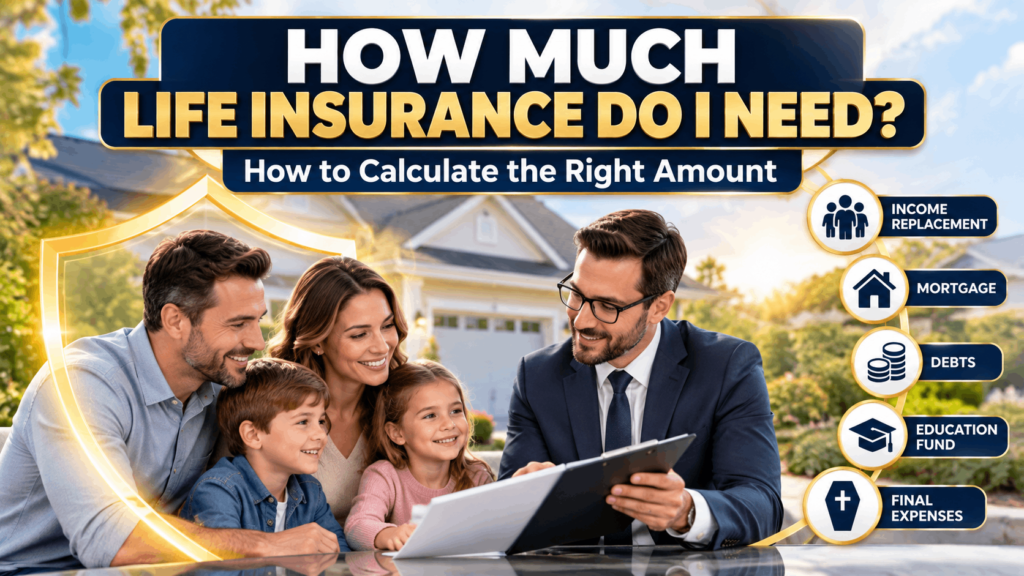
How Much Life Insurance Do I Need? How to Calculate the Right Amount If you are asking how much life insurance do I need, there is no single coverage amount that works for every person or family. Your income, debts, dependents, mortgage, savings, existing life insurance, and future financial responsibilities can all affect the answer. Therefore, the most useful approach is not to choose a round number or rely only on a salary multiple. Instead, estimate the financial gap your family or other dependents could face if you were no longer there to provide income, services, or financial support. The National Association of Insurance Commissioners (NAIC) recommends considering factors such as family income, financial dependents, debts, final expenses, children’s education, existing coverage, and future needs when deciding how much life insurance may be appropriate. NAIC Content HHAS Insurance Services Inc. also offers life insurance and explains several policy types, including term, whole, universal, and variable universal life insurance. hhasinsurance.com You can review the HHAS Life Insurance page as you consider your options. How Much Life Insurance Do I Need? Start With Your Financial Responsibilities A life insurance calculation should begin with the people and obligations that depend on you financially. For example, a parent supporting young children may need to consider many years of income replacement. Meanwhile, someone approaching retirement may have fewer working years to replace but could still have a mortgage, spouse, dependent family members, business obligations, or other financial goals. Start by considering: The NAIC similarly encourages consumers to ask how much family income they provide, who depends on them financially, how survivors would handle debts and final expenses, and whether current employer coverage is enough. NAIC Content As a result, your life insurance amount should reflect your actual financial situation rather than another person’s coverage. A Simple Way to Calculate Your Life Insurance Needs One practical way to estimate coverage is to compare your family’s potential financial needs with the resources they would already have available. You can begin with this simple framework: Estimated coverage need = income replacement + debts + future financial needs + final expenses − existing financial resources This is an estimate rather than a universal insurance formula. However, it can help organize the major factors that matter. Step 1: Estimate Income Replacement First, consider how much of your income your household depends on. Then think about how long that support might be needed. For example, a household with young children may want to consider a longer support period than a household in which both spouses are close to retirement. However, replacing income does not always mean multiplying your current salary by a fixed number. Your family’s needs may change over time, so consider both the amount and duration of support. Step 2: Add Outstanding Debts Next, review financial obligations that could affect your family. These may include a mortgage, vehicle loans, credit cards, personal loans, or other debts. However, not every debt necessarily needs to be covered dollar for dollar. The important question is how each obligation would affect the people you want to protect. Step 3: Consider Future Expenses After reviewing current obligations, think about future financial needs. For parents, education may be one consideration. In addition, a family might want funds available for childcare, housing, or other long-term needs. The NAIC specifically recommends considering whether children may need money for education and how survivors would manage financially after the insured person’s death. NAIC Content Step 4: Consider Final Expenses Your calculation can also account for expenses your family may face after your death. Instead of using a universal estimate, decide what amount makes sense for your own circumstances and plans. Step 5: Subtract Existing Resources Finally, consider financial resources that may already be available. For example, these could include existing individual life insurance, employer-sponsored coverage, and assets that you specifically intend to make available for family needs. However, be careful about automatically counting every asset. Retirement accounts, emergency savings, and other investments may already serve different financial goals. The result gives you a starting estimate rather than a final recommendation. Life Insurance Calculation Example Consider a hypothetical household in which one person wants to estimate the financial gap their family might face. Suppose that person determines that the family would need: $700,000 for future income support$250,000 to address the mortgage and other debts$150,000 for future family and education goals$25,000 for other anticipated end-of-life needs Their estimated needs would total $1,125,000. Now suppose they have $200,000 of existing life insurance and $125,000 in assets they have specifically decided could be used for these needs. Subtracting $325,000 from $1,125,000 would leave an estimated financial gap of $800,000. That does not mean $800,000 is the right amount for everyone in that situation. Instead, the example demonstrates how a needs-based calculation can work. Your own numbers could produce a very different result. Using a How Much Life Insurance Do I Need Calculator Someone searching for a how much life insurance do I need calculator is usually looking for a faster way to organize these numbers. A useful calculator should consider more than income alone. Ideally, your estimate should account for income replacement, debts, mortgage obligations, future family needs, existing life insurance, and financial resources that could realistically be available to survivors. However, calculators are still estimates. They cannot fully understand your family’s priorities, future plans, business interests, or changing financial situation. Therefore, use a calculator as a starting point rather than treating its result as an automatic coverage recommendation. The NAIC Life Insurance Consumer Resource provides questions consumers can use when evaluating their life insurance needs and policy options. The NAIC also publishes a Life Insurance Buyer’s Guide that discusses estimating coverage based on individual needs. NAIC Content How Much Life Insurance Do I Need Rule of Thumb? The phrase how much life insurance do I need rule of thumb often leads to recommendations based on multiplying annual income by a fixed number. Rules of thumb can provide a quick starting point.
Commercial Surety Bond: Types, Costs & Requirements
Commercial Surety Bond: Types, Costs, and Requirements Explained A commercial surety bond may be required when a business or individual must meet a licensing, regulatory, court, permit, or other legal obligation. Although people sometimes think of surety bonds as standard insurance, they work differently because they involve three parties and guarantee a specific obligation. For U.S. businesses, bond requirements can vary by state, industry, profession, and government agency. Therefore, identifying the exact bond you need should come before comparing prices or applying for coverage. HHAS provides information about business bonding on its Insurance Bonds page. Businesses that already know they need a bond can also use the HHAS Insurance Bond Quote form to begin the quote process. hhasinsurance.com What Is a Commercial Surety Bond? If you are asking what is a commercial surety bond, the easiest place to start is with the three parties involved. The principal is the business or individual required to obtain the bond. The obligee is the government agency, court, organization, or other party requiring it. Finally, the surety is the company that provides the guarantee. The Surety & Fidelity Association of America explains that commercial surety bonds are commonly associated with licensing and obligations required by government bodies, courts, financial institutions, and private organizations. Examples include license and permit bonds, court bonds, and fiduciary bonds. Surety For additional information, businesses can review the Surety & Fidelity Association of America guide to surety bonds. Because the bond guarantees a specific obligation, its purpose is different from a typical business insurance policy. As a result, understanding what the obligee requires is essential before purchasing a bond. How Does a Commercial Surety Bond Work? Suppose a government agency requires a business to obtain a bond before issuing a professional license. In that situation, the business is the principal. Meanwhile, the agency requiring the bond is the obligee. The surety then issues the bond that backs the principal’s obligation according to the bond terms. If the principal fails to meet that obligation and a valid claim is made, the surety responds according to the bond terms and applicable law. However, this does not mean a surety bond works exactly like ordinary insurance. Traditional insurance generally protects the insured against covered losses. Surety, on the other hand, centers on guaranteeing the principal’s obligation to another party. Therefore, business owners should review the actual bond form and requirements rather than assuming all bonds provide the same protection. Commercial Surety Bonds vs. Contract Surety Bonds Commercial and contract surety bonds are related, but they are not the same. According to the U.S. Small Business Administration, contract bonds help ensure that the terms of a specific contract are fulfilled. Commercial bonds, by comparison, generally address compliance with applicable laws and regulations. Small Business Administration The SBA surety bond resource provides additional information about this distinction. Contract surety is especially common in construction. For example, bid, payment, and performance bonds are major contract bond categories. Commercial surety has a broader regulatory focus. For instance, a business might need a bond to obtain a license, satisfy a permit requirement, fulfill a court obligation, or meet another legal requirement. This distinction matters because applying for the wrong bond can delay licensing, permitting, or another business process. Therefore, always start with the exact requirement provided by the obligee. Common Commercial Surety Bond Types There are many commercial surety bond types, and the right one depends on the obligation being guaranteed. Some of the most common categories include license and permit bonds, court bonds, fiduciary bonds, and public official bonds. However, specialized commercial bonds also exist for particular industries and obligations. Surety License and Permit Bonds Government agencies may require license and permit bonds before allowing a business or professional to conduct certain activities. For example, some occupations and regulated industries require a bond as part of the licensing process. However, the exact requirement depends on the jurisdiction and activity involved. The SFAA explains that license and permit bonds can be required by state law, municipal ordinance, regulation, or, in some cases, the federal government. Surety Therefore, businesses should confirm the required amount and bond form directly with the licensing authority. Court Bonds Courts may require bonds in certain legal proceedings. For example, judicial bonds can apply when a party seeks a legal remedy that requires a bond. Depending on the proceeding, examples can include appeal, injunction, attachment, and other court-related bonds. Surety Because court requirements can be very specific, applicants should obtain the required form and instructions directly from the court or their legal adviser. Fiduciary Bonds A court may also require a fiduciary bond when someone is responsible for managing assets or duties on behalf of another person or estate. Depending on the circumstances, fiduciary roles can include administrators, executors, guardians, trustees, receivers, and similar positions. Surety In these situations, the bond generally supports the faithful performance of the duties established by the court. Public Official Bonds Some public officials may be required to obtain bonds before or while serving in office. The specific requirement depends on the position and jurisdiction. Therefore, an official should confirm the required bond form, amount, and conditions with the appropriate government authority. Other Commercial Bonds In addition, commercial surety can include specialized bonds created for particular regulatory, financial, or business obligations. Because requirements differ, there is no single commercial bond that works for every business. Instead, the correct bond must match the obligation being guaranteed. What About Bid, Payment, and Performance Bonds? Business owners often use the term “business bond” broadly. However, bid, payment, and performance bonds are generally classified as contract surety bonds rather than commercial surety bonds. HHAS identifies bid, payment, performance, and ancillary bonds among the common bond types used by business owners on its Insurance Bonds page. hhasinsurance.com The SBA also identifies bid, payment, performance, and ancillary bonds within its Surety Bond Guarantee Program. Notably, the SBA states that its program guarantees eligible contract bonds but does not guarantee commercial bonds. Small Business Administration Therefore,
How Much Does Umbrella Insurance Cost? | HHAS
How Much Does Umbrella Insurance Cost? What You Should Expect to Pay If you are asking how much does umbrella insurance cost, the answer depends on more than the amount of coverage you choose. Your location, number of vehicles, homes, drivers, liability exposure, claims history, and underlying insurance can all influence the final premium. As a general benchmark, the Insurance Information Institute says umbrella policies may cost about $200 to $350 per year for an additional $1 million of liability protection. However, this is only a general reference point. Your actual premium may be higher or lower based on your individual risk profile and insurer. Triple-I Umbrella insurance is designed to provide an additional layer of liability protection beyond certain underlying policies. HHAS Insurance’s umbrella insurance information explains how this coverage can respond after the limits of specified primary policies have been reached. hhasinsurance.com What Is Umbrella Insurance? Umbrella insurance is additional liability protection that generally sits above specified underlying insurance policies, such as homeowners or auto insurance. For example, imagine you are legally responsible for a serious accident and the covered liability costs exceed the limit of your underlying auto policy. Subject to its terms and limits, an umbrella policy may provide additional coverage after the underlying limit has been exhausted. The National Association of Insurance Commissioners explains that personal umbrella insurance may cover liability and defense costs beyond what primary home, auto, or renters insurance pays. Depending on the policy, it may also cover certain liability claims that the primary policy does not. Read the NAIC explanation of umbrella insurance NAIC Content Umbrella insurance is not a replacement for your primary insurance. Instead, it adds another layer of liability protection. How Much Does Umbrella Insurance Cost? So, how much does umbrella insurance cost for a typical U.S. consumer? There is no single price that applies to everyone. Still, the Insurance Information Institute provides a useful benchmark of roughly $200 to $350 annually for an additional $1 million in liability protection. Triple-I Treat that range as a starting point rather than a guaranteed price. Your umbrella insurance cost can change based on the amount of coverage, where you live, the number of insured properties and vehicles, household drivers, and other liability exposures. In addition, an insurer may require certain minimum liability limits on your underlying policies before issuing an umbrella policy. Therefore, the total cost of preparing for umbrella coverage can involve more than the umbrella premium itself. What Factors Affect Umbrella Insurance Cost? Insurers evaluate the amount of liability exposure they may be taking on. As a result, two households seeking the same umbrella limit may receive different prices. Number of Homes and Properties Owning more than one property can increase your liability exposure. A primary residence, vacation property, or rental property can create different risks. Consequently, the number and use of your properties may affect underwriting and pricing. Rental property owners should be especially careful to disclose their properties when requesting coverage. The Insurance Information Institute identifies rental property ownership as one situation that can increase liability exposure. Triple-I Number of Vehicles Cars and other vehicles create liability exposure. Therefore, a household with several vehicles may have a different risk profile from one with a single car. Umbrella coverage commonly works alongside auto liability insurance. You can review the underlying coverage through HHAS auto insurance information before evaluating how an umbrella policy could fit into your broader protection. hhasinsurance.com Household Drivers The number and characteristics of drivers can also matter. For example, the Insurance Information Institute identifies having a teenage driver as a factor worth considering when evaluating additional liability protection. Triple-I Driving history and other underwriting information may also influence the price available from a particular insurer. Pools, Boats, Dogs, and Other Liability Exposures Some households have additional exposures that can increase the chance or severity of a liability claim. Swimming pools, boats, dogs, rental properties, and certain recreational activities are examples worth discussing with an insurance professional. The NAIC and Triple-I both identify several of these exposures when explaining when additional liability protection may be useful. NAIC Content Providing accurate information when requesting a quote helps an insurer evaluate your actual risk. Coverage Limit The amount of umbrella coverage you purchase affects your premium. Higher limits generally cost more in total because the insurer is providing more potential liability protection. However, pricing does not necessarily increase at the same rate for every additional amount of coverage. Instead of selecting a limit based only on premium, consider your assets, existing liability protection, exposures, and financial circumstances. Personal Umbrella Insurance Cost Personal umbrella insurance cost is influenced by your household’s overall liability profile. An insurer may consider your home, vehicles, drivers, recreational vehicles, rental properties, and other relevant exposures. Personal umbrella coverage commonly works with underlying homeowners and auto liability policies. The Insurance Information Institute notes that insurers often require minimum underlying liability limits before they will issue a personal umbrella policy. Its consumer guidance says many insurers look for at least $250,000 of auto liability coverage and $300,000 of homeowners liability coverage before issuing $1 million of umbrella protection. Requirements vary by insurer, so confirm the actual limits that apply to your quote. Triple-I Homeowners can also review HHAS home insurance coverage information to better understand the liability protection that may sit underneath an umbrella policy. hhasinsurance.com Business Umbrella Insurance Cost Umbrella insurance is not limited to personal households. Businesses can also face liability claims that exceed the limits of their underlying commercial policies. In those situations, commercial umbrella coverage may provide another layer of protection, depending on the policy. Business umbrella insurance cost can vary significantly because businesses have very different exposures. Factors may include the type of business, number of locations, operations, vehicles, revenue, liability limits, claims history, number of employees, and other underwriting considerations. For this reason, a small office-based company should not assume its pricing will resemble that of a contractor, retailer, manufacturer, or company with a large commercial vehicle fleet.
Home Insurance Coverage: What’s Covered & Excluded?
Home Insurance Coverage: What Does It Cover and What’s Excluded? Home insurance coverage helps protect your home, personal belongings, and finances when a covered loss occurs. However, a homeowners policy does not protect against every type of damage. Understanding what your policy includes, what it excludes, and whether your limits match your needs can help you avoid costly surprises. A typical homeowners policy may include protection for the dwelling, other structures, personal property, additional living expenses, personal liability, and medical payments. However, the exact protection depends on your policy, insurer, location, limits, deductibles, and endorsements. Homeowners who want to explore their options can learn more about home insurance from HHAS Insurance. What Is Home Insurance Coverage? Home insurance is a form of property insurance designed to protect a private residence and provide other forms of financial protection connected to homeownership. The National Association of Insurance Commissioners explains that homeowners policies generally include several categories of protection, including the home itself, personal belongings, liability, and certain additional living expenses. NAIC Content For a consumer-friendly explanation of these protections, homeowners can review the NAIC homeowners insurance resource. Your policy documents ultimately determine what your own insurance covers. Therefore, it is important to review your declarations page, coverage limits, deductible, exclusions, and endorsements rather than assuming every homeowners policy works the same way. What Does Home Insurance Coverage Usually Include? Several types of protection may appear within a homeowners policy. Each one serves a different purpose. Dwelling Coverage Dwelling coverage protects the physical structure of your insured home against covered causes of loss. Depending on the policy, this can include the house itself as well as attached structures, fixtures, and built-in systems or appliances. For example, if a covered fire damages part of a home, dwelling coverage may help pay eligible repair or rebuilding costs, subject to the policy terms, deductible, and coverage limit. The goal is not simply to match the home’s market price. Instead, homeowners should consider the cost to rebuild the insured structure. The NAIC recommends that dwelling coverage reflect the cost of fully rebuilding the home. NAIC Content Other Structures Coverage A property often includes more than the main house. Other structures coverage may protect structures that are separate from the home, such as a detached garage, fence, or shed. However, limits and eligible structures vary by policy. As a result, homeowners with substantial detached structures should check whether their existing limits provide suitable protection. Personal Property Coverage Your home contains items that may collectively represent a significant investment. Personal property coverage may help protect belongings such as: However, some categories of property may have special limits. High-value items may also require additional coverage or scheduling. Therefore, creating a home inventory can make it easier to understand what you own and whether your current limits make sense. Loss of Use and Additional Living Expenses A covered loss may make your home temporarily unfit to live in. In that situation, loss-of-use coverage may help with certain additional living expenses while repairs take place, subject to the terms and limits of your policy. Eligible expenses can vary. Therefore, review your policy before assuming every temporary expense will qualify. Personal Liability Coverage Homeowners insurance can also provide liability protection. For example, if you become legally responsible for covered bodily injury or property damage involving another person, personal liability coverage may help with eligible costs up to the policy limit. Some homeowners may want additional liability protection beyond their underlying policy limits. HHAS also provides information about umbrella insurance, which can provide liability protection above specified underlying policies. Medical Payments Coverage A homeowners policy may include limited medical payments coverage for certain injuries to people who are not insured under the policy. This coverage differs from personal liability coverage. Consequently, homeowners should review both sections of their policy to understand how each works. What Is Considered Personal Property for Home Insurance Coverage? A common question is what is considered personal property for home insurance coverage. In simple terms, personal property generally means belongings you own rather than the physical structure of your house. Examples can include furniture, clothing, electronics, household items, and other possessions. The NAIC describes personal property coverage as protection for possessions such as furniture, electronics, and clothing when covered damage or loss occurs. NAIC Content However, not every possession receives unlimited protection. Certain valuable items can have special limits or conditions. Jewelry, art, collectibles, and other high-value property may need additional coverage depending on the policy and value of the items. A detailed home inventory can help. Record major possessions, purchase information when available, serial numbers, photographs, and estimated replacement values. Then review those records periodically as you buy or replace items. What Does Home Insurance Coverage Exclude? Knowing what insurance does not cover can be just as important as knowing what it does. Exclusions differ by policy and insurer. Still, several risks often require special attention. Flood Damage Most standard homeowners insurance policies do not cover flood damage. The National Flood Insurance Program specifically advises homeowners that most homeowners insurance does not provide this protection. Floodsmart Homeowners can use the National Flood Insurance Program’s flood insurance resources to learn more about flood risk and separate flood coverage. This distinction matters because water damage can have different causes. A covered plumbing loss, for example, is not the same insurance event as rising floodwater. Earthquake and Earth Movement Standard homeowners policies may also exclude earthquake damage and certain forms of earth movement. The NAIC notes that earthquake protection may require an add-on or separate policy. NAIC Content Therefore, homeowners in areas with earthquake exposure should specifically check how their policy handles this risk. Wear, Maintenance, and Preventable Damage Home insurance is designed to address covered losses, not routine home maintenance. Damage that develops because of deterioration, neglect, or certain maintenance problems may not qualify for coverage. For example, replacing an old component simply because it has reached the end of its useful life is different from repairing damage caused by