Best Car Insurance for New Drivers: Coverage, Costs, and Savings Explained
Finding the best car insurance for new drivers can feel challenging, especially when you are purchasing auto insurance for the first time. Between coverage options, monthly premiums, deductibles, and available discounts, understanding what you actually need is not always straightforward.
New drivers often face higher insurance costs because they have limited driving experience. However, being new to driving does not mean you have to choose an expensive policy or settle for inadequate protection.
The right auto insurance should provide suitable coverage, meet your state’s requirements, and fit your budget. More importantly, it should help protect you financially if an accident occurs.
Whether you are a teenager getting your first license, a parent insuring a young driver, or an adult learning to drive later in life, this guide explains how to compare coverage, understand costs, and find opportunities to save.
At HHAS Insurance Services Inc., drivers can explore auto insurance information and request a quote based on their coverage needs.
What Makes the Best Car Insurance for New Drivers?
The best car insurance for new drivers is not necessarily the policy with the lowest monthly payment. Instead, it is coverage that balances affordability, financial protection, and the driver’s individual circumstances.
For example, a teenager driving a family-owned vehicle may have different insurance needs from an adult financing a new car.
Likewise, someone driving an older vehicle may choose different physical damage coverage than a driver with a newer, more expensive vehicle.
Before selecting a policy, consider these important factors:
- State-required insurance coverage
- Bodily injury and property damage liability limits
- Collision and comprehensive coverage
- Uninsured and underinsured motorist protection
- Monthly or annual premiums
- Deductibles and out-of-pocket expenses
- Available discounts
- Insurance company claims service
- Vehicle financing or leasing requirements
Although price matters, choosing insufficient coverage could leave you responsible for substantial expenses after an accident.
Therefore, compare both the cost and the protection offered before making a decision.
What Does Car Insurance for New Drivers Cover?
Understanding the different types of auto insurance is one of the most important steps for first-time drivers.
Some coverages are required by state law, while others are optional or may be required by a lender.
According to the National Association of Insurance Commissioners (NAIC), auto insurance policies contain different types of protection, and coverage requirements vary by state.
Liability Insurance
Liability insurance helps pay for certain injuries or property damage you cause to other people in an accident.
It generally includes two main categories.
Bodily Injury Liability
This coverage helps pay for qualifying injuries to other people when you are legally responsible for an accident.
Depending on the policy, it may cover eligible medical expenses, legal defense costs, and damages.
Property Damage Liability
This coverage helps pay for qualifying damage you cause to someone else’s vehicle or property.
For example, if you accidentally hit another driver’s parked car, property damage liability may help cover the resulting damage.
However, liability insurance generally does not pay to repair your own vehicle.
Collision Coverage
Collision insurance helps pay for covered damage to your vehicle resulting from a collision with another vehicle or object.
For example, if a new driver accidentally hits a guardrail, collision coverage may help pay for repairs after the applicable deductible.
This coverage is particularly important to consider when driving a newer or financed vehicle.
Comprehensive Coverage
Comprehensive insurance covers certain types of vehicle damage that do not result from a collision.
Depending on the policy, examples may include:
- Theft
- Vandalism
- Fire
- Hail damage
- Falling objects
- Certain weather-related damage
- Contact with animals
Although comprehensive coverage is generally optional under state insurance laws, lenders may require it when a vehicle is financed.
Uninsured and Underinsured Motorist Coverage
Uninsured motorist coverage may help protect you if an uninsured driver causes a qualifying accident.
Meanwhile, underinsured motorist coverage can provide protection when an at-fault driver’s liability insurance is insufficient to cover an eligible loss.
Coverage rules, limits, and availability vary by state.
Therefore, review these options carefully rather than assuming every policy includes the same benefits.
Medical Payments and Personal Injury Protection
Medical Payments coverage and Personal Injury Protection (PIP) can help pay certain accident-related medical expenses.
Depending on the state and policy, PIP may also cover eligible lost wages or other expenses.
However, these coverages have different rules and are not interchangeable in every state.
Optional Auto Insurance Benefits
Some insurers also offer additional protection, including roadside assistance and rental reimbursement.
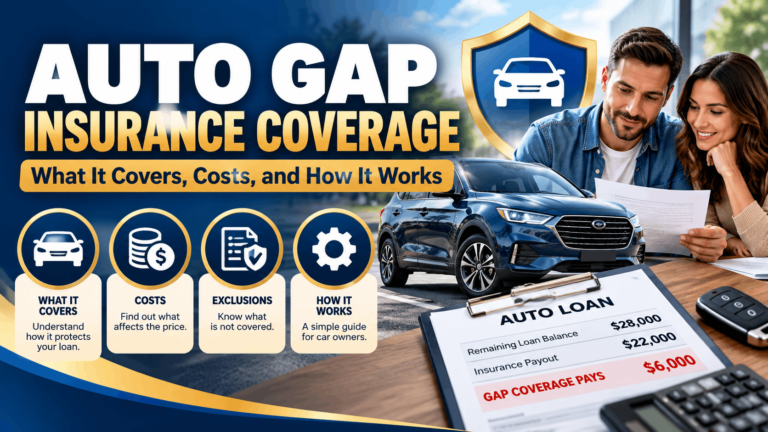
Other options may include gap coverage, which can help address certain differences between a vehicle’s covered total-loss settlement and its outstanding loan or lease balance.
Gap coverage may be offered separately and is subject to its own terms.
You can explore these coverage categories through HHAS Auto Insurance.
Best Car Insurance for New Drivers: Liability vs. Full Coverage
One of the biggest decisions new drivers face is whether to purchase liability-only insurance or broader coverage.
Liability-only insurance generally focuses on covered injuries and property damage you cause to others.
In contrast, the term full coverage commonly refers to a policy that combines liability, collision, and comprehensive coverage.
However, full coverage is not a standardized insurance product. It does not mean every possible loss is covered.
| Coverage Feature | Liability-Only Policy | Common Full-Coverage Combination |
|---|---|---|
| Injury liability to others | Included | Included |
| Property damage liability to others | Included | Included |
| Collision damage to your vehicle | Generally not included | Usually included |
| Comprehensive damage to your vehicle | Generally not included | Usually included |
| Uninsured motorist coverage | Depends on state and policy | Depends on state and policy |
| Monthly premium | Often lower | Often higher |
| Lender requirements | May be insufficient | Often includes required physical damage coverage |
For example, a driver with an older, fully paid-off vehicle may decide that liability-only coverage fits their financial situation.
However, someone financing a newer car will generally need collision and comprehensive coverage to satisfy lender requirements.
Before choosing either option, consider the vehicle’s value, your savings, your ability to pay for repairs, and your exposure to liability claims.
What Is the Average Cost of Car Insurance for New Drivers?
The average cost of car insurance for new drivers depends on several factors, including age, location, driving experience, vehicle type, and coverage selections.
As a result, there is no single monthly premium that accurately represents every first-time driver in the United States.
The NAIC’s February 2026 release of its 2022–2023 Auto Insurance Database Report reported a national combined average premium of $1,438 per insured vehicle in 2023.
However, this figure covers the broader insured-vehicle population. It is not an average specifically for new drivers, nor is it a current 2026 insurance quote.
For first-time drivers, personalized quotes are more useful than a national average.
Factors That Affect New Driver Insurance Costs
| Pricing Factor | How It Can Affect Insurance |
|---|---|
| Age and experience | Limited driving history can affect premiums |
| Driving record | Accidents and violations may increase costs |
| Vehicle type | Expensive or high-performance vehicles may cost more to insure |
| Location | Insurance rates vary by state and ZIP code |
| Coverage limits | Higher liability limits may increase premiums |
| Deductibles | Higher physical damage deductibles may reduce premiums |
| Annual mileage | Driving frequency can affect pricing |
| Previous coverage | Gaps in coverage may affect rates |
| Available discounts | Eligible discounts may lower premiums |
Insurers may also consider credit-based insurance information where state law permits it.
However, states restrict or prohibit certain rating factors, so pricing methods are not identical nationwide.
Consequently, two new drivers of the same age may receive very different insurance quotes.
Why Is Car Insurance for New Drivers More Expensive?
Insurance companies evaluate the likelihood and potential cost of future claims when setting premiums.
Because new drivers have limited driving experience, insurers have less individual driving history to evaluate.
Younger drivers may also face higher premiums because insurers consider age-related accident patterns where state law permits.
However, being a new driver is not the same as being a young driver.
For example, a 35-year-old who recently obtained a license may still face higher rates because of limited driving experience.
Meanwhile, a 22-year-old with several years of safe driving may have a different insurance profile.
Other factors, such as the vehicle, driving location, and coverage limits, also influence the final premium.
Therefore, comparing quotes is important regardless of when you begin driving.
How to Find Cheap Car Insurance for New Drivers
Finding cheap car insurance for new drivers requires comparing insurance options without sacrificing necessary financial protection.
Fortunately, several practical strategies can help.
Compare Quotes With the Same Coverage
Different insurance companies can charge different premiums for similar coverage.
Therefore, request quotes using the same liability limits, deductibles, drivers, and vehicles.
Otherwise, a cheaper quote may simply provide less protection.
For example, compare two policies with identical liability limits and collision deductibles before deciding which insurer offers better value.
Choose an Appropriate Deductible
A deductible is the amount you generally pay toward a covered physical damage claim before insurance pays the remaining eligible amount.
For example, suppose your vehicle suffers $3,000 in covered collision damage.
With a $500 deductible, the insurer may pay $2,500 toward the eligible repairs, subject to policy terms.
However, with a $1,000 deductible, your share would increase to $1,000.
A higher deductible can reduce premiums, but only choose an amount you could comfortably afford after an accident.
Consider Insurance Costs Before Buying a Vehicle
Not all vehicles cost the same to insure.
Repair expenses, vehicle value, safety features, theft exposure, and other characteristics can affect premiums.
Therefore, request insurance estimates before purchasing your first car.
A vehicle with a lower purchase price does not automatically have the lowest insurance cost.
Maintain a Safe Driving Record
Avoiding accidents and traffic violations can help protect your driving record.
Over time, additional driving experience and a favorable claims history may improve your insurance options.
However, discounts and premium changes depend on the insurer and applicable state rules.
Discounts That Make Car Insurance for New Drivers More Affordable
One of the best ways to find affordable car insurance for new drivers is to ask about available discounts.
Not every insurer offers the same savings, and eligibility requirements vary.
Good Student Discounts
Some insurers offer discounts to qualifying students who maintain certain academic standards.
These discounts may be especially useful for teenagers and college students.
However, eligibility can depend on age, enrollment status, and the insurer’s requirements.
Driver Education Discounts
Completing an approved driver education or defensive driving course may qualify certain drivers for discounts.
For example, some insurers recognize qualifying training programs for younger drivers.
Before enrolling in a course solely for insurance savings, confirm whether your insurer accepts it.
Multi-Car Discounts
Households insuring more than one vehicle with the same company may qualify for a multi-car discount.
Therefore, families adding a new driver should compare the cost of an existing household policy against a separate policy.
Bundling Auto and Home Insurance
Some insurers offer discounts when customers purchase multiple eligible policies from the same company.
For example, combining auto and homeowners insurance may provide savings.
However, compare the combined cost against separate policies before deciding.
Homeowners can also explore HHAS Home Insurance when reviewing their broader insurance needs.
Usage-Based Insurance Programs
Some insurance companies offer programs that evaluate driving behavior through a smartphone application or connected device.
These programs may consider mileage, braking, acceleration, driving times, and other factors.
For safe drivers, participation may create opportunities for savings.
However, the NAIC’s guidance on usage-based insurance explains that such programs can also raise privacy concerns and may result in higher premiums under certain arrangements.
Therefore, review the program’s terms before enrolling.
Other Possible Discounts
Depending on the insurer, additional discounts may be available for automatic payments, paying premiums in full, eligible vehicle safety features, or maintaining continuous coverage.
Always ask which discounts apply to your specific situation.
The Cheapest Car Insurance for New Drivers Isn’t Always the Best
Searching for the cheapest car insurance for new drivers is understandable, especially when insurance becomes another major monthly expense.
However, the lowest premium does not necessarily provide the strongest financial protection.
Consider two hypothetical policies.
| Feature | Policy A | Policy B |
|---|---|---|
| Monthly premium | Lower | Higher |
| Liability coverage | State minimum | Higher limits |
| Collision coverage | Not included | Included |
| Comprehensive coverage | Not included | Included |
| Potential out-of-pocket exposure | Greater for certain losses | Reduced for certain covered losses |
Policy A may be appropriate for some drivers with older vehicles and sufficient savings.
However, Policy B may be better suited to someone who needs protection against damage to their own vehicle.
Neither policy is automatically the best choice.
Instead, evaluate the financial risks you can afford to handle personally.
A low premium can become expensive if an accident creates losses your policy does not cover.
New Driver Insurance by Age and Experience
Insurance needs can differ significantly depending on when someone begins driving.
Teenagers and Drivers Under 21
Teen drivers often face higher insurance premiums because of limited experience and age-related risk factors.
Parents may find it useful to compare adding a teenager to a household policy with purchasing separate coverage.
Additionally, good student and approved driver education discounts may help eligible families manage costs.
New Drivers Under 25
Drivers under 25 may face higher premiums, although actual rates depend on driving experience and other factors.
However, turning 25 does not guarantee an automatic reduction.
A clean driving record, appropriate coverage choices, and regular quote comparisons remain important.
First-Time Drivers Over 25
Adults who begin driving later in life may have different insurance profiles from teenagers.
Nevertheless, limited driving experience can still influence premiums.
Therefore, older first-time drivers should also compare insurers, check available discounts, and avoid assuming their age guarantees a low rate.
Adding a New Driver to a Family Policy vs. Buying Separate Insurance
Families frequently ask whether a new driver should join an existing auto insurance policy or purchase separate coverage.
The answer depends on the driver’s living arrangement, vehicle ownership, insurer rules, and available discounts.
Adding a Driver to an Existing Policy
Joining a household policy may offer certain advantages, such as access to multi-car or multi-policy discounts.
However, adding an inexperienced driver can also increase the household’s total premium.
Additionally, insurers may require licensed household members to be disclosed, even when they are not the primary drivers.
Purchasing a Separate Policy
A separate policy may make sense for a driver who owns a vehicle or is no longer eligible for coverage under a family policy.
However, individual coverage may cost more in some situations.
Therefore, request quotes for both arrangements when permitted and compare the total household expense.
Most importantly, confirm that the policy correctly lists the vehicles and drivers.
How to Compare Car Insurance Quotes as a First-Time Driver
Comparing insurance quotes becomes easier when you use the same information for every insurer.
Before requesting coverage, gather:
- Driver’s license information
- Vehicle make, model, and year
- Vehicle identification number (VIN)
- Residential ZIP code
- Expected annual mileage
- Vehicle ownership or financing details
- Driving history
- Desired coverage limits
- Preferred deductibles
Next, review the quotes using a consistent comparison.
| Comparison Item | What to Check |
|---|---|
| Liability limits | Are the same limits included in every quote? |
| Collision coverage | Is it included, and what is the deductible? |
| Comprehensive coverage | Are the limits and deductibles comparable? |
| Uninsured motorist coverage | What protection is offered? |
| Monthly premium | What is the recurring payment? |
| Total policy premium | What is the full six-month or annual cost? |
| Discounts | Which discounts are included or conditional? |
| Payment fees | Are there installment or other applicable fees? |
| Claims service | How does the insurer handle claims and support? |
The NAIC Consumer’s Guide to Auto Insurance provides additional information about comparing insurers and understanding coverage.
Also, review the insurance company’s financial condition and consumer complaint information when available.
Taking these steps can help you select coverage based on value rather than price alone.
Common Mistakes New Drivers Should Avoid
Purchasing your first insurance policy can be confusing. However, avoiding several common mistakes can make the process easier.
Choosing only the state minimum: Minimum liability limits may not provide enough protection after a serious accident.
Ignoring deductibles: A low premium may come with a deductible you cannot comfortably afford.
Assuming full coverage covers everything: Every policy has exclusions, limits, and conditions.
Failing to disclose household drivers: Inaccurate driver information can create underwriting or claims problems.
Overlooking discounts: Eligible savings may be missed when drivers do not ask about them.
Allowing coverage to lapse: A lapse can create legal and financial problems and may affect future premiums.
Driving before coverage is effective: Make sure your insurance is active before operating a vehicle.
Finally, remember that state requirements vary. Always confirm the rules that apply where your vehicle is registered and driven.
How HHAS Insurance Can Help New Drivers
Choosing auto insurance is easier when you understand the coverage available and the information needed for a quote.
HHAS Insurance Services Inc., also known as Hard Hats And Suits, provides insurance services for consumers, families, and businesses.
Its Auto Insurance page explains common coverage categories, including liability, collision, comprehensive, medical payments, and uninsured motorist protection.
Drivers can also use the agency’s online quote request option to begin exploring insurance coverage.
Whether you are buying your first vehicle, adding a new driver to a household policy, or reviewing your current coverage, comparing options can help you make a more informed decision.
Ready to explore your auto insurance options?
Request an Auto Insurance Quote from HHAS Insurance and provide details about your vehicle and driving needs. Coverage availability depends on your location and insurer eligibility.
Frequently Asked Questions About Car Insurance for New Drivers
What Is the Best Car Insurance for New Drivers?
The best option depends on your age, driving experience, vehicle, location, budget, and coverage needs. Compare several insurers using similar liability limits, deductibles, and optional coverages before choosing.
What Is the Cheapest Car Insurance for New Drivers?
No single insurer is consistently the cheapest for every new driver. Rates vary by state, vehicle, driving profile, and insurer. Requesting comparable quotes is the most reliable way to identify affordable options for your circumstances.
How Much Does Car Insurance Cost for a First-Time Driver?
The cost varies significantly based on age, driving experience, location, vehicle type, and coverage. A personalized quote provides a more useful estimate than a national average.
Why Is Insurance More Expensive for New Drivers?
Insurers may charge higher premiums because new drivers have limited driving experience and a shorter history for assessing risk. Age, vehicle choice, and other rating factors can also affect costs.
Is Full Coverage Worth It for New Drivers?
Broader coverage may be valuable for drivers with newer, financed, or expensive vehicles. However, the decision depends on the vehicle’s value, the cost of coverage, and your ability to pay for damage yourself.
Can a New Driver Get Insurance Without a Driving History?
Yes. Insurance may be available to newly licensed drivers without an established driving history. However, eligibility, premiums, and coverage options depend on the insurer and state.
Is It Cheaper to Add a New Driver to a Parent’s Policy?
It can be cheaper in some situations, but not always. Household eligibility, vehicle ownership, available discounts, and the insurer’s pricing rules affect the result. Compare both arrangements when permitted.
Do New Drivers Qualify for Insurance Discounts?
Some new drivers may qualify for good student, driver education, multi-car, bundling, or usage-based insurance discounts. Availability depends on the insurer and applicable requirements.
Does Car Insurance Automatically Become Cheaper at Age 25?
No. Turning 25 does not guarantee lower premiums. Driving experience, claims history, location, vehicle, and insurer pricing also influence costs.
Can I Get Car Insurance With a Learner’s Permit?
Coverage arrangements for permit holders vary by insurer and state. Some learners may be covered under a household policy, but families should confirm the insurer’s requirements before the learner begins driving.
How Can I Save Money on My First Auto Insurance Policy?
Compare quotes, choose a vehicle with manageable insurance costs, ask about discounts, consider appropriate deductibles, and maintain safe driving habits. Also, review your policy periodically as your experience and circumstances change.
Final Thoughts: Choosing the Best Car Insurance for New Drivers
Finding the best car insurance for new drivers requires balancing affordability with meaningful financial protection.
Although first-time drivers may face higher premiums, comparing insurers and understanding coverage options can help you avoid unnecessary expenses.
Start by identifying your state’s requirements. Next, decide whether you need collision, comprehensive, or additional protection. Finally, compare quotes with similar coverage limits and ask about available discounts.
Remember, the cheapest policy is not always the one that provides the best value after an accident.
Whether you are insuring your first car or helping a family member get started, choosing appropriate coverage can help you drive with greater confidence.
Take the next step toward protecting yourself on the road.
Visit HHAS Insurance Services Inc. to learn more about auto insurance, or request a car insurance quote to explore your available options.