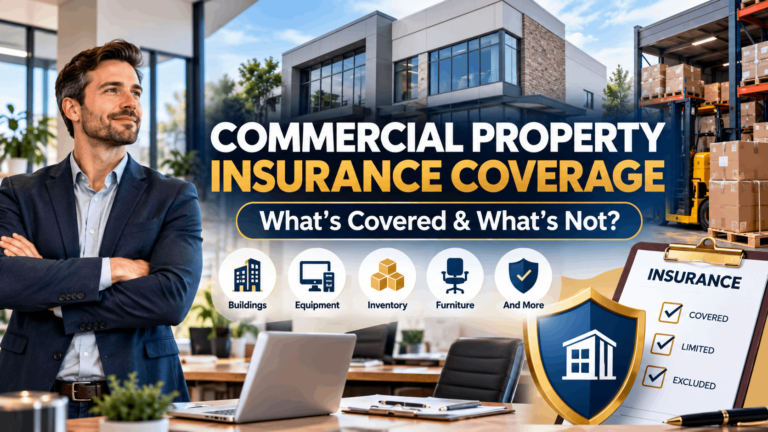
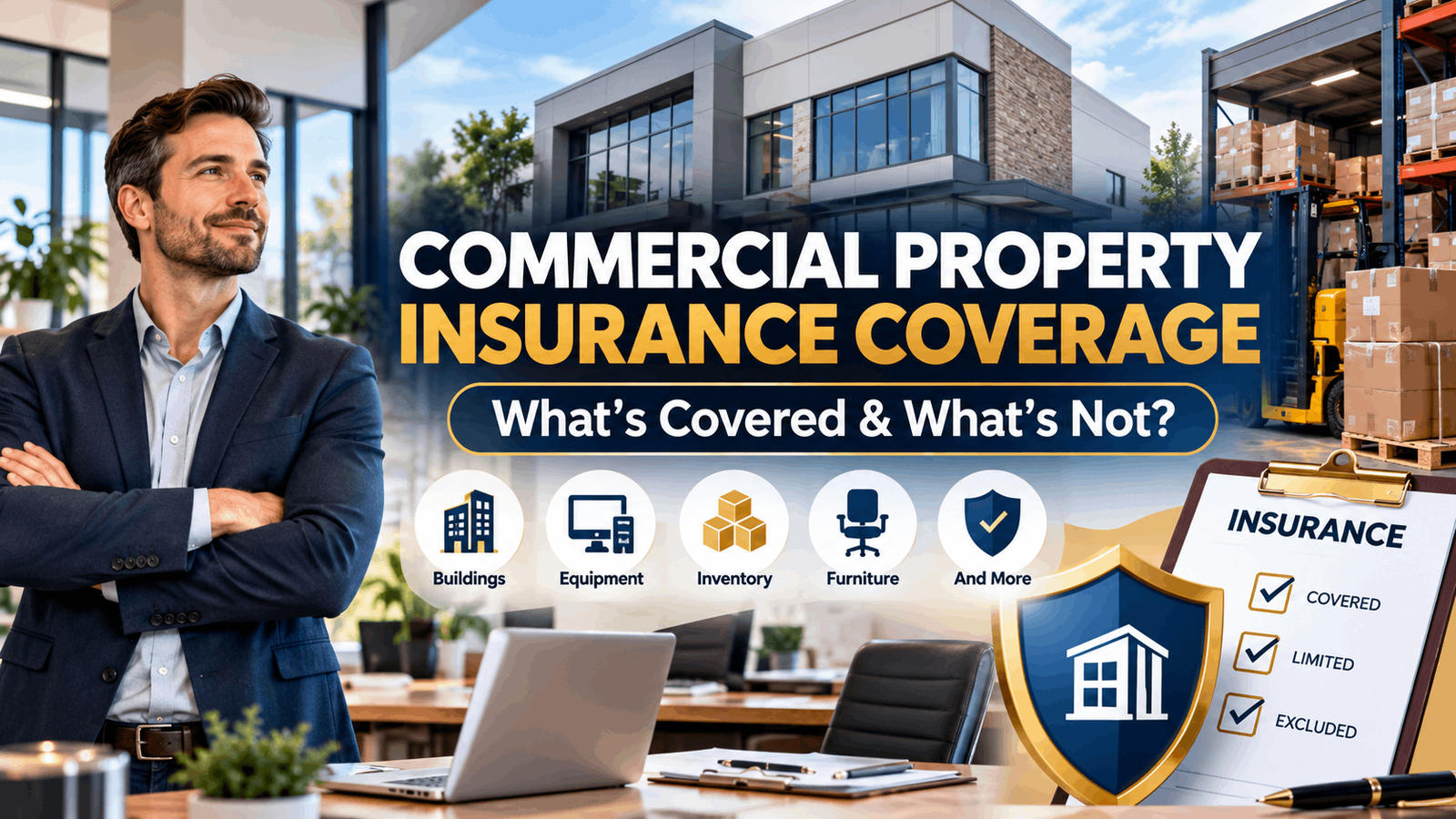
Commercial Property Insurance Coverage: What’s Covered and What’s Not?
Commercial property insurance coverage helps protect the physical assets a business depends on when covered damage or loss occurs. Buildings, equipment, inventory, furniture, computers, and other business property can represent a major investment. Without appropriate protection, repairing or replacing those assets could create a serious financial burden.
However, commercial property insurance does not cover every type of loss. Coverage depends on the policy, limits, deductibles, exclusions, endorsements, property values, and cause of damage.
For U.S. business owners, understanding these details is an important part of managing risk. HHAS Insurance Services offers business insurance solutions that include commercial property insurance and other forms of business protection.
What Is Commercial Property Insurance Coverage?
Commercial property insurance helps protect insured business property from covered causes of loss.
Depending on the policy, covered property may include:
- Buildings
- Office furniture
- Equipment
- Machinery
- Inventory
- Computers
- Supplies
- Business records
- Signs
- Certain outdoor property
The U.S. Small Business Administration identifies commercial property insurance as an important option for businesses with significant physical assets. Its guidance notes that this coverage can protect company property from losses caused by various covered events. Read the SBA guidance on business insurance.
Coverage varies by policy. Therefore, business owners should read their policy carefully instead of assuming every asset or event receives protection.
What Does Commercial Property Insurance Cover?
A commercial property insurance policy can cover several categories of physical business assets.
HHAS explains on its Business Insurance page that commercial property insurance can address risks involving an organization’s buildings and personal property.
The exact protection depends on the policy you select.
Business Buildings
If your company owns its building, commercial property insurance may protect the insured structure against covered causes of loss.
Coverage may help with eligible repair or replacement costs after a covered event. However, limits, deductibles, valuation provisions, and other policy conditions apply.
Businesses that lease their locations also need to understand their responsibilities. A landlord’s policy should not automatically be assumed to cover a tenant’s inventory, equipment, furniture, or other business property.
Equipment and Machinery
Equipment often plays a central role in daily operations.
Depending on the business, property may include:
- Computers
- Office equipment
- Manufacturing equipment
- Tools
- Point-of-sale systems
- Specialized machinery
Coverage limits should reflect the equipment your business actually owns and depends on.
Furniture and Fixtures
Desks, chairs, shelving, cabinets, fixtures, and other furnishings can represent a substantial investment.
Commercial property coverage may help protect eligible insured items when a covered event damages them.
Business Inventory
Businesses that sell physical products should also consider their inventory exposure.
A major inventory loss can create replacement expenses while reducing the company’s ability to generate sales.
Therefore, keep accurate inventory records and regularly review whether your coverage limits reflect current inventory values.
Computers and Technology
Most modern businesses depend on technology.
Commercial property insurance may protect certain physical computer equipment against covered property losses. However, physical property coverage and cyber insurance address different risks.
For example, physical damage to a computer is different from a data breach or cyberattack.
What Events May Commercial Property Insurance Cover?
Coverage depends on the policy form and its specific terms.
According to the National Association of Insurance Commissioners, business property policies can provide protection against covered events such as fire, lightning, windstorms, hail, explosions, and other specified causes of loss.
Some policies provide broader protection than others.
As a result, two policies called “commercial property insurance” may not provide identical protection.
Always review the covered causes of loss and exclusions before purchasing a policy.
What Commercial Property Insurance May Not Cover
Understanding exclusions is just as important as understanding covered property.
A standard policy may exclude or limit certain losses. Exact exclusions depend on the contract.
Flood Damage
Standard commercial property policies may exclude flood damage.
Businesses with meaningful flood exposure may need separate flood insurance or another appropriate form of protection.
Therefore, never assume every type of water damage is automatically covered.
Earthquakes and Earth Movement
Earthquakes and certain types of earth movement may also require separate coverage or an endorsement.
Businesses located in areas with earthquake exposure should specifically review how their policy handles this risk.
Normal Wear and Tear
Insurance generally protects against covered losses rather than normal deterioration.
For example, equipment that simply wears out after years of use may not create a covered property claim.
Regular maintenance remains the responsibility of the business.
Certain Equipment Breakdowns
A commercial property policy may not cover every mechanical or electrical equipment failure.
Companies that rely on specialized machinery should ask whether equipment breakdown coverage is appropriate.
Business Vehicles
Business-owned cars, vans, and trucks generally require commercial auto insurance rather than commercial property coverage.
HHAS also identifies commercial auto as a separate form of protection on its Business Insurance page.
Employee Theft and Crime
The circumstances surrounding theft can affect coverage.
Certain employee-related losses may require crime or employee-dishonesty protection.
Businesses whose employees handle cash, inventory, equipment, or valuable property should examine this risk carefully.
Commercial Property Insurance Coverage and Business Interruption
Property damage can create two separate financial problems.
First, the company may need to repair or replace damaged assets. In addition, physical damage may prevent the business from operating normally.
Commercial property insurance primarily addresses covered physical property losses. Business interruption or business income insurance can address certain financial consequences of a covered shutdown.
The NAIC’s business interruption guidance explains that business interruption insurance may help businesses manage monetary losses during periods of suspended operations when a covered event causes physical property damage.
For some small businesses, these protections may be packaged together through a Business Owner’s Policy.
HHAS offers additional information about this option on its Business Owner’s Package (BOP) Insurance page.
Commercial Property Insurance Cost: What Affects Your Premium?
Commercial property insurance cost varies between businesses.
Insurers consider several factors when evaluating risk and determining premiums.
These may include:
- Property location
- Building construction
- Property value
- Equipment value
- Inventory value
- Business activities
- Coverage limits
- Deductible
- Selected coverage
- Fire protection
- Security measures
- Local catastrophe exposure
- Claims history
- Other underwriting factors
For example, a small professional office may have very different property risks from a restaurant, warehouse, retailer, or manufacturer.
Therefore, generic price estimates may not accurately reflect what your business will pay.
How Property Location Can Affect Cost
Location can influence both risk and pricing.
Businesses operating in areas exposed to hurricanes, wildfires, severe storms, or other hazards may face different underwriting conditions from businesses in lower-risk locations.
Building characteristics can also affect the premium.
Insurers may consider construction type, occupancy, fire protection, security systems, and surrounding risks when evaluating commercial property.
Property Value and Coverage Limits Matter
The amount of property your company owns affects its exposure.
A small office with basic furniture and computers has different insurance needs from a manufacturer with expensive machinery and significant inventory.
Create and maintain an accurate inventory of your business assets.
The NAIC recommends assessing business property values before purchasing insurance and reviewing them periodically afterward.
If your company buys new machinery, increases inventory, renovates a location, or expands, review your coverage limits.
Replacement Cost vs. Actual Cash Value
Valuation can significantly affect a property claim.
Two common terms are replacement cost and actual cash value.
Replacement cost coverage generally focuses on the amount needed to repair or replace covered property according to the policy’s terms without applying depreciation in the same manner as actual cash value.
Actual cash value generally accounts for depreciation.
The NAIC explains these valuation approaches in its small business insurance guidance.
Because valuation can materially affect a claim payment, review this provision before choosing a policy.
How to Find Low Cost Commercial Property Insurance
Searching for low cost commercial property insurance is understandable. Still, price should not be the only consideration.
A cheaper policy may contain:
- Lower limits
- Higher deductibles
- More exclusions
- Different valuation provisions
- Narrower coverage
Instead, compare the overall value of each option.
Review the covered property, causes of loss, exclusions, limits, deductibles, valuation method, endorsements, and premium.
The goal is appropriate protection at a manageable cost rather than simply purchasing the cheapest available policy.
How to Get a Commercial Property Insurance Quote
Before requesting a commercial property insurance quote, gather accurate information about your company.
You may need:
- Business address
- Business activities
- Building ownership or lease information
- Building characteristics
- Equipment values
- Inventory values
- Furniture and fixtures
- Security systems
- Fire protection
- Prior claims information
- Desired coverage limits
Accurate information allows the insurance provider to evaluate the business more effectively.
Business owners ready to explore coverage can use the HHAS Business Insurance Quote page to begin the process.
Why Compare Commercial Property Insurance Quotes?
Different policies can have different premiums, deductibles, limits, exclusions, and terms.
Therefore, comparing commercial property insurance quotes should involve much more than comparing prices.
Ask:
- Are the coverage limits equivalent?
- Are the deductibles the same?
- How is property valued?
- Which causes of loss are covered?
- What exclusions apply?
- Is business income coverage available?
- Are important endorsements included?
- Are there special limits for certain property?
A lower quote is not necessarily better if it leaves important assets inadequately protected.
How Much Commercial Property Insurance Coverage Do You Need?
The appropriate amount depends on the property your business owns or is responsible for protecting.
Start with a detailed inventory.
Include:
- Building value, when applicable
- Furniture
- Machinery
- Computers
- Equipment
- Inventory
- Supplies
- Fixtures
- Signs
- Specialty property
Next, consider what it would cost to repair or replace those assets according to the valuation method used by your policy.
Do not rely on outdated numbers.
Businesses change. New equipment, inventory growth, renovations, expansion, and relocation can all change your exposure.
Commercial Property Insurance for Businesses That Lease Space
Renting your business location does not necessarily eliminate the need for property insurance.
Your landlord may insure the building. However, the landlord’s insurance should not automatically be assumed to protect your company’s property.
The NAIC specifically advises business tenants to review their leases and not rely on landlords to insure their business property.
Your company may still need coverage for:
- Equipment
- Computers
- Furniture
- Inventory
- Supplies
- Improvements
- Other owned business property
Review your lease carefully because it may also contain insurance requirements.
Commercial Property Insurance for Home-Based Businesses
Operating from home creates different insurance considerations.
A homeowners policy should not automatically be assumed to provide sufficient protection for business equipment, inventory, or business-related liabilities.
The SBA’s business insurance guidance identifies home-based business insurance as a distinct consideration for entrepreneurs operating from their homes.
Identify the assets your home-based business depends on and determine whether your existing insurance addresses those exposures.
Commercial Property Coverage and a Business Owner’s Policy
Some eligible small businesses may obtain property coverage as part of a Business Owner’s Policy rather than purchasing every coverage separately.
HHAS explains that its BOP insurance options may package property insurance with other forms of business protection.
A BOP and a standalone commercial property policy are not automatically interchangeable. Eligibility, coverage, limits, and exclusions can differ.
Therefore, compare the available structures based on your actual business needs.
Is Commercial Property Insurance Required?
Commercial property insurance is not universally required for every U.S. business simply because the company owns property.
However, insurance requirements can arise from:
- Landlords
- Lenders
- Lease agreements
- Financing arrangements
- Client contracts
- Other commercial agreements
Requirements can also vary by state and situation.
The SBA notes that insurance requirements vary by state and advises businesses to review the rules that apply where they operate.
How to Choose a Commercial Property Insurance Policy
Choosing a commercial property insurance policy starts with understanding your actual exposure.
First, identify the physical property your business depends on.
Next, determine its value.
Then consider which events could cause significant financial loss.
Compare potential policies based on:
- Coverage limits
- Deductibles
- Covered causes of loss
- Exclusions
- Valuation methods
- Optional endorsements
- Business income options
- Special property limits
- Premiums
HHAS provides information about commercial property and other business coverages through its Business Insurance resource.
Common Commercial Property Insurance Mistakes
One common mistake is underestimating property values.
If your business has grown since the policy was purchased, old limits may no longer reflect current inventory or equipment.
Another mistake is assuming every cause of damage is covered.
Floods, earthquakes, equipment breakdowns, and other exposures may require additional protection depending on the policy.
Choosing coverage solely on price can also create problems.
Finally, poor asset documentation can make a future claim more difficult. Maintain receipts, photographs, serial numbers, inventory records, and other relevant documentation.
Frequently Asked Questions
What does commercial property insurance coverage include?
Coverage varies by policy. It may protect buildings, equipment, inventory, furniture, computers, supplies, machinery, and other insured business property against covered causes of loss.
What does commercial property insurance not cover?
Exclusions vary by policy. Floods, earthquakes, normal wear and tear, certain equipment failures, vehicles, and other exposures may be excluded or require separate coverage.
How much does commercial property insurance cost?
Commercial property insurance cost depends on factors such as property value, business type, location, building characteristics, coverage limits, deductibles, claims history, and other underwriting considerations.
How do I get a commercial property insurance quote?
Gather information about your business, property values, location, equipment, inventory, building, and desired limits. You can then request a business insurance quote from HHAS.
Should I compare commercial property insurance quotes?
Yes. Compare premiums alongside deductibles, limits, exclusions, valuation methods, and other policy terms. A lower premium does not necessarily mean equivalent coverage.
Does commercial property insurance cover inventory?
Inventory may qualify as covered business property, depending on the policy. Coverage applies according to the policy’s limits, exclusions, and covered causes of loss.
Does commercial property insurance cover theft?
Some theft losses may qualify for coverage. However, the policy terms, circumstances, and exclusions determine whether a specific loss is covered.
Does commercial property insurance cover floods?
Standard commercial property policies may exclude flooding. Businesses with flood exposure should determine whether separate flood insurance is appropriate.
Can commercial property coverage be included in a BOP?
Yes, property coverage is commonly included in Business Owner’s Policies. HHAS provides additional information about BOP insurance for business owners.
Do businesses that lease their locations need property insurance?
They may. A landlord’s policy should not be assumed to protect the tenant’s equipment, furniture, inventory, or other business property.
Protect the Property Your Business Depends On
Buildings are only one part of a company’s physical investment.
Equipment, inventory, technology, machinery, furniture, and other assets can be equally important to daily operations.
The right commercial property insurance coverage should reflect your actual property, risks, and financial exposure.
Review what your business owns, understand what your policy covers, identify exclusions, and compare available options carefully.
Learn more about business insurance from HHAS or request a business insurance quote when you are ready to explore coverage.