BOP Insurance for Small Business: Coverage, Cost, and Benefits
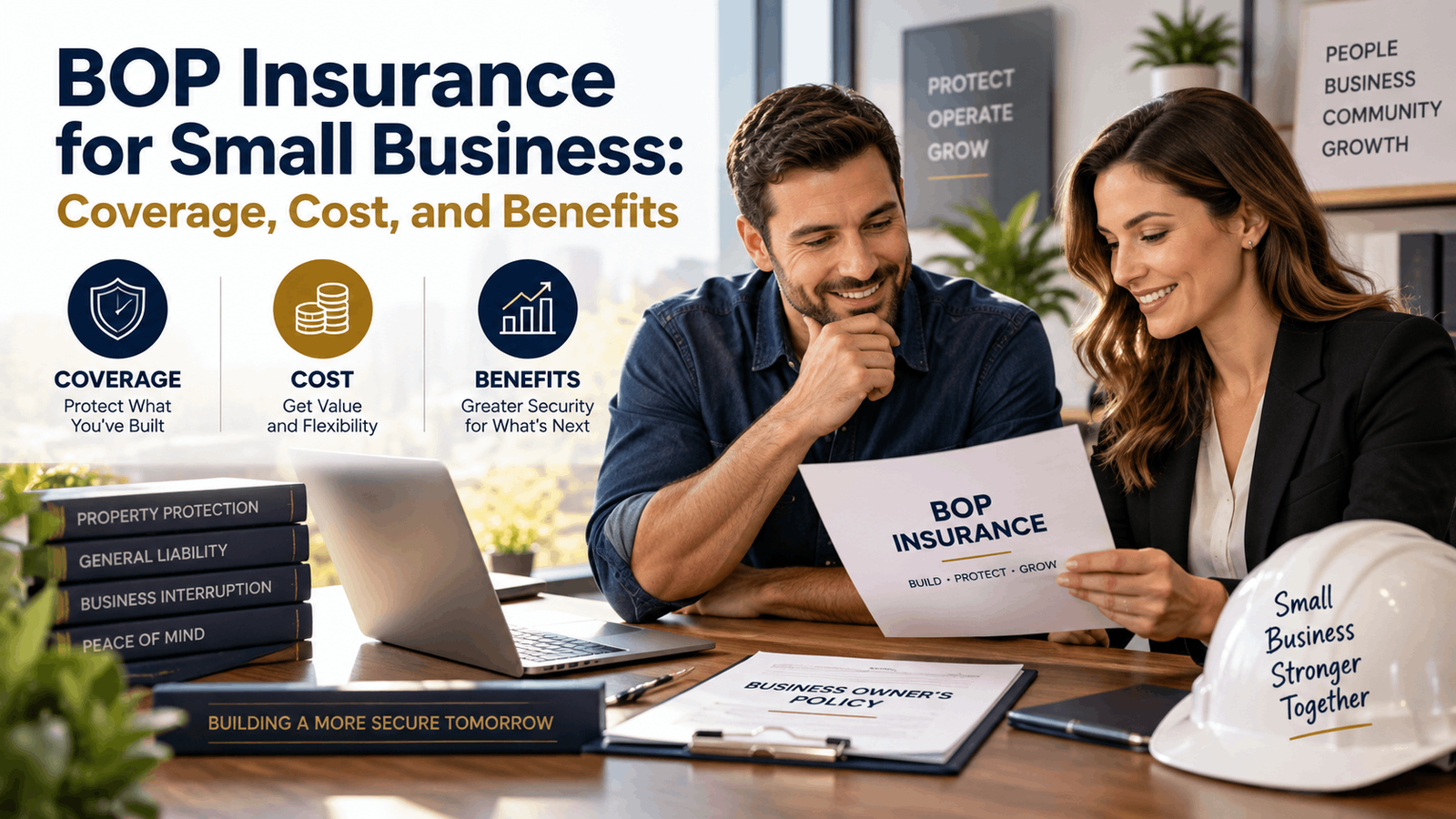
BOP insurance for small business can make commercial insurance easier to understand by combining several important types of coverage into one policy. For many U.S. small business owners, a Business Owner’s Policy (BOP) can provide property and liability protection while simplifying the insurance-buying process.
However, a BOP is not automatically right for every company. Eligibility, available coverage, exclusions, limits, deductibles, and pricing can vary. Therefore, understanding what a BOP covers—and what it may leave out—is important before choosing a policy.
HHAS Insurance Services offers BOP insurance as part of its business insurance solutions. Small business owners can also request a business insurance quote from HHAS Insurance Services to explore coverage based on their specific operations.
What Is BOP Insurance for Small Business?
A Business Owner’s Policy is a commercial insurance package designed for qualifying small businesses. Rather than purchasing certain common coverages separately, a BOP combines them within one policy.
The California Department of Insurance describes a BOP as a combination commercial policy that includes property, general liability, and business interruption coverage. The department also notes that BOPs have underwriting guidelines that determine which businesses qualify.
Similarly, the U.S. Small Business Administration identifies a Business Owner’s Policy as an insurance package for small business owners that combines common coverage options.
For business owners, this structure can make it easier to manage several common risks under one policy.
What Does a Business Owner’s Policy Cover?
Exact coverage depends on the insurer and policy. However, a BOP commonly brings together three important areas of business protection.
General Liability Coverage
General liability coverage can help address certain third-party claims involving bodily injury, property damage, and other covered liability risks.
For example, suppose a customer visits your business and is injured in a covered accident. General liability coverage may apply, depending on the circumstances and policy terms.
The U.S. Small Business Administration’s business insurance guidance also identifies general liability insurance as a common form of business coverage for risks such as bodily injury and property damage.
Commercial Property Coverage
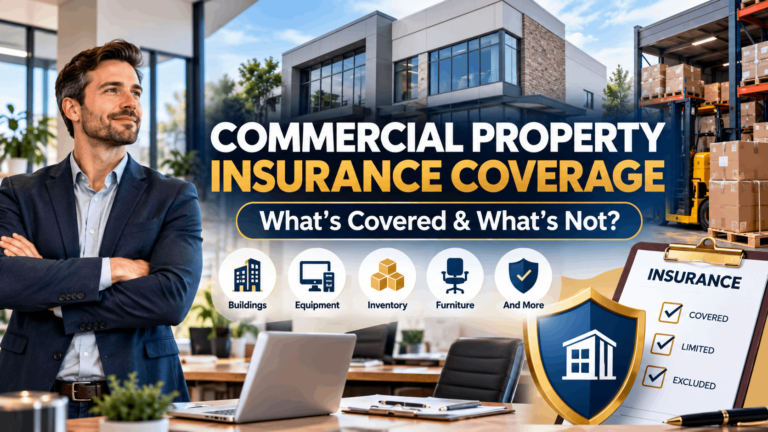
Many small businesses depend on physical assets to operate. Depending on the policy, these assets may include equipment, inventory, furniture, fixtures, and other business property.
Property coverage within a BOP can help protect covered business property against certain losses listed in the policy.
However, covered causes of loss, exclusions, deductibles, and limits matter. Therefore, business owners should review exactly what property is insured and under what circumstances coverage applies.
Business Interruption Coverage
A serious covered property loss can affect more than your building or equipment. It may also interrupt normal business operations.
Business interruption coverage, sometimes referred to as business income coverage, may help with certain financial losses when a covered event prevents a business from operating normally.
However, this coverage is subject to policy terms, limits, waiting periods, and exclusions. As a result, owners should understand how their specific policy defines a covered interruption.
What Is Usually Not Included in a BOP?
Understanding what a policy does not cover is just as important as understanding what it includes.
For example, the California Department of Insurance explains that business owner’s policies generally exclude commercial auto and workers’ compensation.
Depending on your business, you may need separate policies or additional coverage for risks such as workers’ compensation, commercial vehicles, professional liability, or other specialized exposures.
Furthermore, businesses should not assume every event affecting their property is automatically covered. Policy exclusions can be significant.
Therefore, review the complete policy rather than relying only on the phrase “Business Owner’s Policy.”
BOP Insurance for Small Business Owners: Who May Benefit?
BOP insurance for small business owners is generally designed for qualifying smaller companies with common property and liability exposures.
For example, certain offices, retailers, service businesses, and other qualifying operations may be candidates for a BOP. The California Department of Insurance lists examples such as hardware stores, barbershops, greeting card shops, accounting offices, and some apartment risks.
However, qualification is not based simply on being a “small business.” Insurers may consider factors such as the type of business, location, property, operations, building characteristics, revenue, and other underwriting information.
As a result, two similarly sized businesses may have different insurance options.
What Are the Benefits of a BOP?
One of the main advantages of a BOP is convenience. Instead of managing certain common commercial coverages separately, qualifying businesses can obtain them through one package.
Another potential benefit is coordinated coverage. Property and liability risks are common concerns for many small companies, so combining them can make the insurance program easier to manage.
The SBA also notes that a BOP can simplify the insurance-buying process.
In addition, bundling common coverages may be financially attractive for some qualifying businesses. However, savings are not guaranteed. Actual pricing depends on the business, insurer, coverage, limits, deductibles, and underwriting factors.
Therefore, the value of a BOP should be measured by both its price and how well the coverage matches the company’s risks.
Average Cost of BOP Insurance for Small Business
Business owners searching for the average cost of BOP insurance for small business often want a simple dollar amount. Unfortunately, one average price cannot accurately represent every business.
Commercial insurance pricing depends on the characteristics of the individual risk.
For example, the California Department of Insurance explains that commercial property ratings can consider factors such as building size, construction type, sprinkler protection, and fire protection classification. General liability ratings may use factors such as payroll, gross sales, or square footage, depending on the classification.
Consequently, a small professional office and a retail business may receive different BOP quotes even if both are considered small businesses.
Rather than relying only on an online average, consider requesting a quote based on your actual operations.
What Factors Can Affect BOP Insurance Cost?
Several factors may influence what a small business pays for a BOP.
Your industry and operations matter because different businesses face different risks. Location can also affect exposure, while the value and type of business property can influence property coverage needs.
In addition, insurers may consider business size, sales, payroll, building characteristics, selected limits, deductibles, claims history, and other underwriting information.
Deductibles deserve particular attention. A higher deductible may lower the insurance rate in some situations. However, it also means the business accepts more of the financial responsibility when a covered loss occurs. The California Department of Insurance advises businesses not to choose deductibles so large that they could threaten the company’s financial position.
Therefore, price should always be considered alongside coverage.
How to Choose BOP Insurance for Small Business
If you’re researching how to choose BOP insurance for small business, start with your risks rather than the premium.
First, identify the property your company relies on. Next, consider how customers, vendors, or members of the public interact with your business. You should also think about what could happen financially if a covered property loss temporarily interrupted your operations.
Then compare policy terms carefully.
Pay attention to coverage limits, deductibles, exclusions, endorsements, covered property, liability protection, and business interruption provisions. In addition, determine whether important risks need separate insurance.
The SBA recommends assessing business risks, working with a licensed insurance professional, and comparing policy terms and prices when purchasing business insurance.
How Do You Find the Best BOP Insurance for Small Business?
The best BOP insurance for small business is not necessarily the policy with the lowest premium.
Instead, the appropriate option depends on your company’s operations, assets, risks, and financial situation.
For example, one policy may have a lower premium but a higher deductible. Another may provide different limits or optional coverage. Likewise, exclusions may vary between policies.
When comparing options, consider:
- Whether your business qualifies for the BOP
- What property is covered
- General liability limits
- Business interruption provisions
- Deductibles
- Exclusions
- Optional endorsements
- Risks requiring separate policies
- Overall premium
Looking at the complete policy can help you make a more informed decision than comparing price alone.
BOP vs. Separate Business Insurance Policies
A BOP can be convenient, but it does not eliminate the need for every other form of business insurance.
For instance, a company with employees may need workers’ compensation based on applicable state requirements. A company that owns business vehicles may need commercial auto coverage. Meanwhile, certain professional businesses may need professional liability insurance.
The right approach depends on your company’s operations.
Therefore, think of a BOP as a possible foundation for qualifying businesses rather than an all-inclusive solution for every commercial risk.
For additional information about commercial coverage, the California Department of Insurance Commercial Insurance Guide explains BOPs, commercial property, general liability, commercial auto, workers’ compensation, premiums, deductibles, and other business insurance topics.
When Should You Review Your BOP?
A BOP that fit your business when you purchased it may not always match your needs.
For example, your company may hire employees, move to a larger location, purchase expensive equipment, increase inventory, introduce new services, or expand operations.
These changes can affect your risks and insurance needs.
Therefore, consider reviewing your coverage at renewal and whenever your business changes significantly. Regular reviews can help you determine whether your existing policy still reflects the company you operate today.
How to Get a BOP Insurance Quote
Before requesting a BOP quote, gather accurate information about your company. This may include your business type, location, operations, property, revenue, payroll, building information, prior claims, and desired coverage.
Requirements can vary by insurer. However, accurate information gives the insurance professional a clearer picture of your business.
HHAS Insurance Services states that it helps businesses reduce risk and offers BOP insurance among its business insurance options. Business owners can use the company’s online quote process to begin exploring coverage.
Request a business insurance quote from HHAS Insurance Services
Frequently Asked Questions About BOP Insurance for Small Business
What does BOP stand for in business insurance?
BOP stands for Business Owner’s Policy. It is a commercial insurance package designed for qualifying small businesses and typically combines property, general liability, and business interruption coverage.
What does BOP insurance for small business cover?
Coverage varies by policy. However, a BOP commonly combines commercial property, general liability, and business interruption coverage. Always review the actual policy because limits, exclusions, and optional coverages can differ.
Does a BOP include workers’ compensation?
Generally, workers’ compensation is not included in a standard BOP. A business with employees may need separate workers’ compensation coverage depending on applicable laws and its circumstances.
Does a BOP include commercial auto insurance?
Commercial auto is generally separate from a BOP. Businesses that own or use vehicles for business purposes should determine whether they need separate commercial auto coverage.
How much does BOP insurance cost?
There is no single price that applies to every small business. Pricing can depend on business operations, property, location, sales or payroll, coverage limits, deductibles, and other underwriting factors.
Is a BOP right for every small business?
No. BOPs have eligibility and underwriting requirements. In addition, some businesses have risks that require separate or more specialized coverage.
Can I customize a Business Owner’s Policy?
Depending on the insurer and policy, optional coverage may be available to address specific business needs. However, available options vary, so business owners should review them with their insurance professional.
How often should small business owners review a BOP?
A review around renewal is useful. In addition, consider reviewing coverage after meaningful business changes, such as moving locations, purchasing significant equipment, expanding services, or changing operations.
Protect Your Small Business With Coverage That Fits
Ultimately, BOP insurance for small business can provide qualifying companies with a convenient way to combine several important types of commercial coverage.
However, convenience should not replace careful evaluation. Review what is covered, what is excluded, the limits and deductibles, and whether your business requires additional policies.
HHAS Insurance Services serves businesses as part of its broader insurance offering and provides an online business insurance quote process.
If you’re ready to review your business insurance options, visit HHAS Insurance Services or request a business insurance quote.