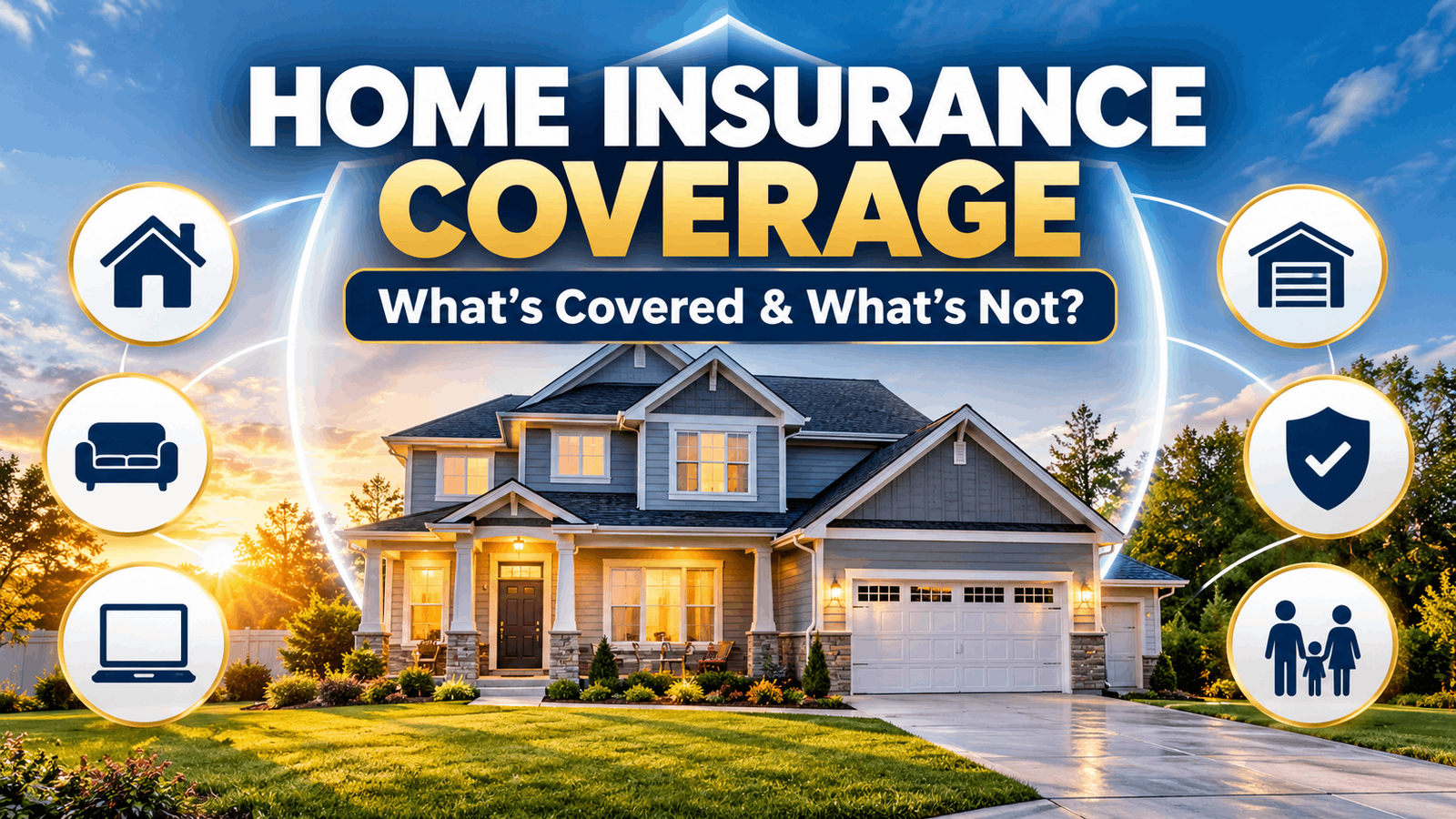
Home Insurance Coverage: What Does It Cover and What’s Excluded?
Home insurance coverage helps protect your home, personal belongings, and finances when a covered loss occurs. However, a homeowners policy does not protect against every type of damage. Understanding what your policy includes, what it excludes, and whether your limits match your needs can help you avoid costly surprises.
A typical homeowners policy may include protection for the dwelling, other structures, personal property, additional living expenses, personal liability, and medical payments. However, the exact protection depends on your policy, insurer, location, limits, deductibles, and endorsements.
Homeowners who want to explore their options can learn more about home insurance from HHAS Insurance.
What Is Home Insurance Coverage?
Home insurance is a form of property insurance designed to protect a private residence and provide other forms of financial protection connected to homeownership.
The National Association of Insurance Commissioners explains that homeowners policies generally include several categories of protection, including the home itself, personal belongings, liability, and certain additional living expenses. NAIC Content
For a consumer-friendly explanation of these protections, homeowners can review the NAIC homeowners insurance resource.
Your policy documents ultimately determine what your own insurance covers. Therefore, it is important to review your declarations page, coverage limits, deductible, exclusions, and endorsements rather than assuming every homeowners policy works the same way.
What Does Home Insurance Coverage Usually Include?
Several types of protection may appear within a homeowners policy. Each one serves a different purpose.
Dwelling Coverage
Dwelling coverage protects the physical structure of your insured home against covered causes of loss.
Depending on the policy, this can include the house itself as well as attached structures, fixtures, and built-in systems or appliances.
For example, if a covered fire damages part of a home, dwelling coverage may help pay eligible repair or rebuilding costs, subject to the policy terms, deductible, and coverage limit.
The goal is not simply to match the home’s market price. Instead, homeowners should consider the cost to rebuild the insured structure. The NAIC recommends that dwelling coverage reflect the cost of fully rebuilding the home. NAIC Content
Other Structures Coverage
A property often includes more than the main house.
Other structures coverage may protect structures that are separate from the home, such as a detached garage, fence, or shed.
However, limits and eligible structures vary by policy. As a result, homeowners with substantial detached structures should check whether their existing limits provide suitable protection.
Personal Property Coverage
Your home contains items that may collectively represent a significant investment.
Personal property coverage may help protect belongings such as:
- Furniture
- Clothing
- Electronics
- Appliances
- Household goods
- Personal items
However, some categories of property may have special limits. High-value items may also require additional coverage or scheduling.
Therefore, creating a home inventory can make it easier to understand what you own and whether your current limits make sense.
Loss of Use and Additional Living Expenses
A covered loss may make your home temporarily unfit to live in.
In that situation, loss-of-use coverage may help with certain additional living expenses while repairs take place, subject to the terms and limits of your policy.
Eligible expenses can vary. Therefore, review your policy before assuming every temporary expense will qualify.
Personal Liability Coverage
Homeowners insurance can also provide liability protection.
For example, if you become legally responsible for covered bodily injury or property damage involving another person, personal liability coverage may help with eligible costs up to the policy limit.
Some homeowners may want additional liability protection beyond their underlying policy limits. HHAS also provides information about umbrella insurance, which can provide liability protection above specified underlying policies.
Medical Payments Coverage
A homeowners policy may include limited medical payments coverage for certain injuries to people who are not insured under the policy.
This coverage differs from personal liability coverage. Consequently, homeowners should review both sections of their policy to understand how each works.
What Is Considered Personal Property for Home Insurance Coverage?
A common question is what is considered personal property for home insurance coverage.
In simple terms, personal property generally means belongings you own rather than the physical structure of your house.
Examples can include furniture, clothing, electronics, household items, and other possessions. The NAIC describes personal property coverage as protection for possessions such as furniture, electronics, and clothing when covered damage or loss occurs. NAIC Content
However, not every possession receives unlimited protection.
Certain valuable items can have special limits or conditions. Jewelry, art, collectibles, and other high-value property may need additional coverage depending on the policy and value of the items.
A detailed home inventory can help. Record major possessions, purchase information when available, serial numbers, photographs, and estimated replacement values. Then review those records periodically as you buy or replace items.
What Does Home Insurance Coverage Exclude?
Knowing what insurance does not cover can be just as important as knowing what it does.
Exclusions differ by policy and insurer. Still, several risks often require special attention.
Flood Damage
Most standard homeowners insurance policies do not cover flood damage. The National Flood Insurance Program specifically advises homeowners that most homeowners insurance does not provide this protection. Floodsmart
Homeowners can use the National Flood Insurance Program’s flood insurance resources to learn more about flood risk and separate flood coverage.
This distinction matters because water damage can have different causes. A covered plumbing loss, for example, is not the same insurance event as rising floodwater.
Earthquake and Earth Movement
Standard homeowners policies may also exclude earthquake damage and certain forms of earth movement.
The NAIC notes that earthquake protection may require an add-on or separate policy. NAIC Content
Therefore, homeowners in areas with earthquake exposure should specifically check how their policy handles this risk.
Wear, Maintenance, and Preventable Damage
Home insurance is designed to address covered losses, not routine home maintenance.
Damage that develops because of deterioration, neglect, or certain maintenance problems may not qualify for coverage.
For example, replacing an old component simply because it has reached the end of its useful life is different from repairing damage caused by a covered event.
Pest and Infestation Damage
Damage caused by termites, rodents, or other infestations may also fall outside standard coverage.
Regular inspections and maintenance can help homeowners identify these problems before they become more serious.
Certain Sewer or Drain Backup Losses
Do not assume every type of water backup receives standard protection.
Depending on the policy, sewer or drain backup coverage may require an endorsement or additional coverage. The NAIC identifies sewer backup as one of the protections homeowners may be able to add. NAIC Content
Review your policy carefully if this exposure concerns you.
Intentional Damage
Insurance generally does not protect an insured person against intentional damage that they cause.
The exact policy language controls how an insurer handles a particular claim, so homeowners should review the exclusions and conditions in their own contract.
How Much Home Insurance Coverage Do I Need?
If you are asking how much home insurance coverage do I need, start with the cost of rebuilding your home rather than simply looking at its sale price.
Market value and rebuilding cost are different concepts. Land value, local real estate demand, construction costs, labor, materials, and the characteristics of your home can all affect those figures.
The NAIC advises homeowners to choose dwelling protection that reflects the full cost to rebuild the insured home and to review that amount over time. NAIC Content
Next, consider your personal belongings.
Create an inventory and estimate what it could cost to replace your possessions after a major covered loss. In addition, review your liability exposure and any special property that might need additional protection.
Finally, revisit your insurance after major changes such as renovations, additions, significant purchases, or other changes that could affect replacement costs.
How to Choose Your Home Insurance Coverage Amount
Your home insurance coverage amount should reflect your property and financial exposure rather than an arbitrary number.
Start by considering:
- The estimated cost to rebuild your home
- The value of your personal belongings
- Detached structures on your property
- Your personal liability needs
- Valuable property that may have special limits
- Additional living expense protection
- Deductibles you could reasonably afford after a loss
Your insurance professional can help explain how the insurer calculates available limits and what options may apply to your property.
Remember that choosing a higher limit does not mean every loss will receive payment up to that amount. Claims remain subject to covered causes of loss, deductibles, exclusions, valuation provisions, and other policy terms.
Replacement Cost vs. Actual Cash Value
Another important part of home insurance involves how damaged property is valued.
Replacement cost generally focuses on the cost of repairing or replacing covered property according to the policy terms without applying depreciation in the same way as actual cash value.
Actual cash value generally takes depreciation into account.
Because these approaches can lead to different claim outcomes, homeowners should understand which valuation method applies to their dwelling and personal property.
The NAIC Consumer’s Guide to Home Insurance provides additional information about replacement cost, actual cash value, limits, and deductibles. NAIC Content
Home Insurance Coverage Options Worth Reviewing
Different homeowners have different risks. As a result, the right home insurance coverage options depend on the property, location, possessions, and individual circumstances.
Depending on availability and need, homeowners may want to ask about options related to:
- Higher personal property limits
- Scheduled valuable items
- Sewer or water backup
- Increased liability limits
- Umbrella liability
- Flood insurance
- Earthquake protection
- Replacement cost provisions
- Other available endorsements
Not every option will be necessary or available for every homeowner. Therefore, focus on the risks that could meaningfully affect your property and finances.
For information about homeowners protection available through HHAS Insurance, review its home insurance information.
How Deductibles Affect Your Home Insurance
A deductible is the amount you are responsible for under the policy before the insurer pays an eligible claim according to the contract.
Deductible choices can affect premiums. Generally, choosing a higher deductible can reduce the premium, while a lower deductible may increase it. However, homeowners should choose an amount they could reasonably manage after an unexpected loss. NAIC Content
Some policies may also use different deductibles for specific types of losses.
Therefore, look beyond the annual premium when comparing policies. A low premium may not provide the best value if the deductible, limits, or coverage do not fit your needs.
Review Your Home Insurance as Your Needs Change
Buying a policy should not be the last time you think about your coverage.
Homes and lifestyles change.
A renovation may increase rebuilding costs. New furniture or electronics may increase the value of your personal property. Meanwhile, purchasing expensive jewelry, artwork, or collectibles may create a need for additional protection.
Reviewing your policy periodically can help you identify gaps before a loss happens.
It is also useful to review your declarations page when you renew. Check the insured address, limits, deductibles, endorsements, and other key details for accuracy.
Frequently Asked Questions About Home Insurance Coverage
What does home insurance coverage usually include?
A homeowners policy may include dwelling, other structures, personal property, loss-of-use, personal liability, and medical payments coverage. Exact protection depends on the policy and its terms. NAIC Content
What is usually excluded from home insurance?
Common areas that may be excluded or require separate protection include flooding, earthquakes, certain earth movement, routine wear, maintenance issues, and some water backup losses. Exclusions vary, so always review your actual policy.
Does home insurance cover personal belongings?
Homeowners policies commonly provide personal property protection for belongings such as furniture, clothing, and electronics. However, limits and special restrictions may apply to certain categories of property. NAIC Content
Does home insurance cover flood damage?
Most homeowners insurance does not cover flooding. Separate flood insurance may be needed. The National Flood Insurance Program provides information about flood coverage and eligibility. Floodsmart
How much home insurance coverage do I need?
Your needs depend on factors such as rebuilding costs, the value of your belongings, liability exposure, additional living expense needs, and any special property you own. Your dwelling limit should focus on rebuilding the home rather than simply matching its market value. NAIC Content
Is market value the same as replacement cost?
No. A home’s market value reflects real estate factors and includes the value associated with the land. Replacement cost focuses on the cost of rebuilding or repairing the insured structure according to the policy terms. NAIC Content
Can I increase my liability protection?
Depending on the insurer and your situation, you may be able to choose higher liability limits or consider umbrella insurance. HHAS provides additional information about umbrella liability coverage.
Find Home Insurance Coverage That Fits Your Needs
The right home insurance coverage starts with understanding your property, possessions, risks, and policy terms.
Instead of focusing only on price, review what the policy covers, what it excludes, your coverage limits, deductible, valuation method, and any additional protection you may need.
If you are reviewing your homeowners insurance, explore HHAS home insurance options. When you are ready, you can also request a home insurance quote from HHAS.