
Annual Home Insurance Review: Why It’s Essential

Did you know nearly 60% of homeowners are underinsured? This puts their financial security at risk in case of a disaster. An annual home insurance review is key to protecting our most valuable asset—our home. By reviewing our policy each year, we can make sure we have enough coverage. We can update our policy to match our home’s current value and our personal situation. This way, we can avoid any surprises and feel secure knowing we’re ready for anything. Key Takeaways Annual reviews help prevent underinsurance. They ensure protection aligns with current property values. Life changes necessitate coverage adjustments. Regular assessment helps identify gaps in coverage. Peace of mind comes with a thorough review. Importance of Annual Home Insurance Review Getting an annual home insurance review is key to keeping our finances safe and our assets secure. It’s more than just updating our policies. It helps us keep up with changes in our homes’ values and our personal lives. Ensuring Adequate Coverage Ensuring we have enough coverage is a main goal of annual reviews. Our homes are big investments. Their value and what we own can change over time. We need to update our policies to stay protected. By reviewing our coverage, we match it with the current market and our personal situation. This way, we’re ready for any risks that might come our way. Adjusting to Life Changes Life events like getting married, having a child, or retiring can change our insurance needs. These changes might mean we need to add to or change what we own. It’s important to keep up with these changes. A yearly review helps us update our insurance to fit our new life. This keeps us safe as our lives change. Identifying Coverage Gaps Annual reviews help us find any gaps in our coverage. Policies can change, and new risks can appear. It’s important to check our coverage regularly. By finding gaps, we can increase our coverage or add new endorsements. This makes sure we’re fully protected. Review Aspect Description Frequency Coverage Levels Assessing if the policy limits reflect the current value of the home and possessions. Annually Life Changes Updating the policy to encompass new circumstances such as family growth or property changes. As needed Coverage Gaps Identifying areas where the existing policy lacks sufficient coverage. Annually Why You Should Review Home Insurance Every Year Understanding our personal circumstances is key when looking at insurance needs. Yearly reviews help us match our coverage with life changes. This ensures we have the right protection. Changes like family growth or job shifts can change what we need from our insurance. Seeing how our lives change shows why we should check our home insurance every year. Understanding Personal Circumstances Life events can change what we need from our home insurance. For example: Marriage or divorce Birth or adoption of children Starting a home-based business Moving to a new location These changes can make our coverage needs go up or down. Keeping our policies current helps us stay protected and worry-free. Evaluating Home Improvements Our homes often get better, which can change their value and what we need from insurance. It’s important to check our home insurance after making improvements. Think about these upgrades: Major renovations, such as kitchen remodels or room additions Installation of a swimming pool or security systems Finishing a basement or attic By regularly reviewing our home insurance, we can make sure it covers our new home features. This keeps our investment safe. Benefits of Updating Home Insurance Annually Updating our home insurance every year can greatly improve our financial and emotional health. Each year, we get to check our coverage and make changes that fit our current life. This process brings many benefits that help us feel safer and more secure. Potential Cost Savings One big plus of updating our home insurance is the chance to save money. By reviewing our policy, we might find discounts that match our lifestyle changes. For instance, if we’ve retired or started living healthier, we could get lower premiums. This way, we make sure we’re not missing out on any savings we could get. Enhanced Peace of Mind Updating our home insurance also brings peace of mind. Knowing we have the right coverage for our situation makes us feel safe at home. If something unexpected happens, our policy protects our money and our feelings. It lets us focus on our families and enjoying life. Best Practices for Home Insurance Renewal Renewing our home insurance can be a chance to get better protection and save money. It’s important to assess our policy to make sure it fits our current needs. This ensures we have the right coverage. Assessing Current Coverage Levels Checking our current coverage is a must during renewal. We should look at limits, deductibles, and any exclusions. It’s vital to see if our policy matches the value of our home and belongings. After making changes or buying new things, we might need to update our policy. This way, we can make sure we’re fully protected. Inquiring About New Discounts It’s smart to ask about new discounts when renewing. Insurance companies often offer new deals. These can save us a lot of money. Things like home safety upgrades or bundling policies can qualify us for discounts. Checking these out can help us save more. Conclusion Annual home insurance review is key. It keeps our coverage up to date with our changing lives and property values. This way, we stay protected and avoid coverage gaps. Reviewing our insurance yearly helps us find better deals and policies. It’s more than just following rules. It helps us protect our assets and feel secure. By making annual reviews a habit, we become more prepared and make smarter choices. This ensures we’re always ready when we need our insurance. Let’s make this a priority for our financial health and our families’ peace of mind. FAQ Why is it important to review my home insurance annually? Reviewing your home insurance every
Avoiding Common Home Insurance Mistakes Guide

Did you know that nearly 60% of homeowners are underinsured? This leaves them at risk of financial loss during unexpected events. Home insurance is a key financial safety net, protecting our homes and belongings. Yet, many homeowners make mistakes that lead to inadequate coverage. It’s vital to understand these common home insurance errors. We want to help you make informed choices. This way, you can avoid insurance mistakes that could harm your financial security. By focusing on full coverage and knowing the right and wrong ways of home insurance, we can protect our investments and peace of mind. Key Takeaways Many homeowners are underinsured, highlighting the need for complete coverage. Knowing common home insurance mistakes is key for financial safety. Good insurance protection comes from being aware and making smart choices. Understanding home insurance errors helps avoid financial risk. By following home insurance do’s and don’ts, we can protect our investments. Understanding the Importance of Home Insurance Home insurance is key to protecting our most valuable asset: our home. It helps us deal with unexpected events like theft, fire, or natural disasters. Without it, we risk losing money and facing financial hardship. It’s vital to understand how homeowners insurance works. It keeps our homes safe, our belongings secure, and our finances stable. What Home Insurance Covers Knowing what home insurance covers is the first step. Most policies include: Dwelling Protection: This covers damage to our home’s structure. Personal Property: It protects our belongings from theft or damage. Liability Coverage: This helps if someone gets hurt on our property. But, standard policies might not cover all disasters like floods or earthquakes. Getting extra coverage for these risks is important for full protection. Why It’s Essential for Homeowners Homeowners insurance is more than just a policy. It gives us peace of mind and lets us enjoy our homes without worry. It protects our homes, investments, and emotional well-being. By understanding home insurance, we make smart choices. We secure our homes and futures. Common Home Insurance Mistakes to Avoid Understanding the common pitfalls in homeowners insurance can greatly improve our protection. Many people fall into traps that lead to inadequate coverage or unexpected costs. Here, we’ll discuss key areas where home insurance errors often happen. Insuring at the Bare Minimum Choosing the minimum coverage required by law is a common mistake. This leaves homeowners vulnerable during unexpected crises, leading to significant financial hardship. It’s vital to assess our unique risks and choose coverage that offers adequate protection. Relying on Market Value Instead of Replacement Cost Many people base their insurance on their home’s market value, not its replacement cost. Using market value could mean not enough money for rebuilding if disaster strikes. Homeowners must ensure their policy covers the true cost of rebuilding, avoiding this error. Forgetting Additional Coverage Options Another common mistake is forgetting about essential additional coverage options. Flood and earthquake damage often need separate policies. Not considering these options can lead to big losses when disasters hit. We should look for complete coverage that meets our property’s diverse challenges. How to Customize Your Policy Effectively Customizing our home insurance policy helps us get the right protection for our needs. It starts with accurately assessing our property’s value. This way, we can cover our most valuable items well. Learning how to value our personal items is key. Exploring home insurance add-ons also helps us get the best coverage for our situation. Assessing Personal Property Value We start by making a detailed list of our belongings. We focus on high-value items, collectibles, and other special possessions. This careful step helps us accurately value our property. Knowing the true value of our items lets us choose the right coverage limits. We aim for actual replacement costs, not just market values. This is vital for protecting against loss. Add-ons You Might Need Home insurance add-ons can add extra protection to our policy. They cover things that standard policies might miss. Here are some add-ons to think about: Jewelry protection for items worth more than the standard policy limit. Sewage backup coverage to protect against plumbing problems. Earthquake insurance for homes in earthquake-prone areas. Flood insurance, even if our home isn’t in a flood zone, because it’s extra protection. Talking to our insurance provider about these options helps us create a policy that fits our lifestyle. It ensures our assets are well-protected. Taking Advantage of Discounts and Bundling Understanding the financial side of homeowners insurance can lead to big savings. Many homeowners miss out on chances to lower their premiums. Using common discounts for home insurance is a smart way to cut costs. Insurers offer discounts for things like security systems, smoke detectors, and certain professions. These features improve our safety and save us money. Common Discounts for Home Insurance It’s important to know about typical discounts from most insurance companies. Here are some examples: Installing a home security system. Using smoke detectors and fire alarms. Being a member of specific professional organizations or alumni associations. Having a claims-free history. Maintaining a solid credit score. Benefits of Bundling Insurance Policies Another way to save is through policy bundling. Combining homeowners insurance with auto or life insurance can bring big savings. This approach also makes managing our insurance easier. By bundling, we protect all parts of our lives under one policy. This gives us peace of mind and strengthens our protection plan. Conclusion Keeping our homes and belongings safe is very important. We need to know what to do and avoid common mistakes. This includes not having enough insurance and missing out on extra coverage. It’s key to understand our insurance policies well. This way, we can get the right amount of coverage for our needs. Knowing our policies helps us feel more secure and at peace. We should tailor our insurance to our personal situations. Using discounts and combining policies can help us get better coverage. It’s important for homeowners to keep their insurance up to date with their lives. By making smart choices,
Safeguard Your Home: How Home Insurance Protects.

Did you know nearly 60% of American homeowners are underinsured? This puts their biggest investment at risk. Home insurance is key to protecting our homes. It’s vital to understand how it works in today’s world. In this guide, we’ll dive into the importance of homeowners insurance. We’ll see how it offers financial security and peace of mind. Home insurance protects against natural disasters and covers personal belongings. It acts as a safety net against unexpected events. Stay with us as we explore the key aspects of home insurance and what every homeowner should know. Key Takeaways Home insurance is vital for protecting your biggest investment. Many homeowners are underinsured, which can lead to financial loss. Understanding homeowners insurance importance can provide essential peace of mind. A complete home protection plan safeguards against unexpected events. Financial security is a big benefit of having home insurance. Understanding Home Insurance Home insurance is key to protecting homeowners financially. It covers the home’s structure and personal items. Lenders often require it to safeguard their investment, but it benefits homeowners too. An insurance policy has several important parts: Property Protection: Covers damage or loss to the home’s structure. Personal Property Coverage: Helps replace items lost due to theft or disasters. Liability Coverage: Protects against legal claims for injuries or damages on the property. Additional Living Expenses: Covers costs for temporary housing if the home is uninhabitable. Knowing these parts helps choose the right policy. It ensures assets are well-protected. With a good understanding of home insurance, homeowners can avoid huge financial losses from unexpected events like fires, storms, or burglaries. Why You Need Home Insurance Homeowners insurance is very important. It protects us from sudden disasters. If our homes get damaged or we lose personal items, the costs can add up quickly. By getting insurance, we keep our minds at ease. It helps us protect our financial future. Whether we’re paying off a mortgage or own our home, insurance is key to our financial safety. Life is full of surprises, and any event can upset our finances. A good insurance policy helps us bounce back fast. This shows why having insurance is so important. How Home Insurance Protects Your Biggest Investment Home insurance is a key defense for your biggest financial asset. It helps you recover from unexpected events. This way, it keeps your property safe from financial loss due to accidents. Financial Security and Peace of Mind Buying home insurance means securing your financial future. It gives you peace of mind by covering repair costs for things like fires or natural disasters. Knowing your home is protected brings stability and peace of mind. Protection Against Property Damage A good home insurance policy guards against many types of damage. It covers your belongings, landscaping, and appliances. It also shields you from lawsuits if someone gets hurt on your property. Getting home insurance is a smart move to keep your investment safe. For more information, get a free homeowner insurance quote. Types of Home Insurance Coverage It’s key for homeowners to know about the different home insurance coverages. Each type offers special insurance policy benefits to meet various needs. Here are the main types of home insurance: Coverage Type Description Best For HO-1 Basic form that provides limited coverage. Homeowners needing minimal protection. HO-2 Broad form with more coverage than HO-1. Those who want extra benefits without full coverage. HO-3 The most common type, providing all-risk protection for the home structure. Homeowners seeking full protection. HO-4 Also known as renters insurance, covering personal belongings for those who do not own the property. Renters needing coverage for personal items. HO-5 Comprehensive form that covers personal property on an open peril basis. Homeowners desiring maximum protection for belongings. Choosing the right coverage is vital for your home’s security. Knowing these options helps you pick the best home insurance. This ensures you get the most from your policy. What Home Insurance Typically Covers It’s important to know what home insurance covers to protect our valuable assets. Home insurance helps us deal with unexpected events that could harm our homes. Here, we explain the main parts of home insurance policies. Home Structure Protection This part is key to keeping our homes safe. It covers damage from fires, storms, and vandalism. With it, we can fix or rebuild our homes after a disaster, keeping their value. Personal Belongings Coverage Our personal items, like furniture and electronics, are valuable to us. This coverage helps protect them from theft or damage. It allows us to get back what we lost, giving us peace of mind. Liability Protection Included Liability protection is a big part of home insurance. It helps us if someone gets hurt on our property or if we damage theirs. It covers legal and medical costs. This way, we can enjoy our homes without worrying about legal issues. Common Exclusions in Home Insurance Policies Knowing what home insurance doesn’t cover is just as important as knowing what it does. Many people think their policies cover everything, but there are big gaps. It’s key to know these gaps to protect your assets well. Predictable Events Not Covered Home insurance usually doesn’t cover things that are going to happen, like wear and tear. It also doesn’t cover damages from natural events like floods. It’s smart to check your policy and get extra coverage for these risks. Specific Policy Exclusions Some things, like expensive jewelry, might not be fully covered by standard policies. You might need special riders for them. Also, damages from war or terrorism are usually not covered. Knowing what home insurance doesn’t cover can help you feel more secure. Finding the Right Home Insurance for You Choosing the right home insurance can seem overwhelming. With so many options, it’s key to understand why it’s important. We can make this easier by breaking it down step by step. Assess Needs: First, figure out the value of your home and belongings. This helps you know how much coverage you need. The size
Navigating Home Damage or Loss Recovery Steps

Did you know that about 1 in 20 homes with insurance will face a damage claim each year? Home damage or loss is more common than you might think. Knowing how to handle it can make a big difference. Our guide will help you understand what to do after a loss, giving you the support and knowledge you need. Experiencing home damage can be very tough emotionally. We aim to offer clear, helpful advice to guide you through recovery. By being prepared and making informed choices, we hope to make the recovery process clearer and more secure for you. Key Takeaways Understanding common home damage events prepares you for possible risks. Quick actions after damage can greatly speed up recovery. Talking openly with your insurer is key for successful claims. Keeping records of damages helps in filing correct claims. Looking into temporary housing is vital for when you can’t stay home. Picking the right contractors ensures your repairs are done right. Understanding the Scope of Home Damage Homeowners face many challenges when dealing with home damage. Each type of damage has its own risks and needs attention. Knowing about these events helps us act wisely and stay safe. Let’s look at the common types of home damage and the risks they bring. Types of Common Home Damage Events Many events can cause serious damage to homes. Knowing these types helps homeowners prepare better. Here are some common home damage events: Flooding: Heavy rain or broken pipes can cause a lot of water damage. Wildfires: In wildfire-prone areas, homes are at risk of being destroyed, so prevention is key. Storm Damage: Severe weather can damage roofs, knock down trees, and break windows. Earthquakes: In areas with earthquakes, homes may have foundation and wall cracks that need checking. Vandalism: Intentional damage can happen anywhere, affecting a home’s safety and structure. Assessing Immediate Risks After Damage After a damage event, it’s important to check for risks before going back home. Homeowners should follow these steps: Check for structural integrity: Look for damage to walls, floors, and ceilings. Inspect for gas leaks: If you smell gas or hear hissing, get out and call emergency services. Examine electrical hazards: Don’t touch appliances or wiring, and turn off power if needed. Evaluate water damage: Look for standing water and damp spots that can cause mold. By knowing about home damage types and checking for risks, we can take smart steps towards recovery. What to Do After Home Damage or Loss Home damage can be really tough to handle. Taking the right steps right away can help a lot. We need to focus on safety and start the recovery process. Knowing what to do after home damage helps reduce stress. Initial Actions to Take Safety first is key. If there’s a risk of more damage or injury, take these steps: Make sure everyone is safe and leave if needed. Turn off utilities to avoid more harm. Call emergency services if it’s a big risk. Find temporary housing if your home is not safe. These steps are the first steps to manage the situation well. Documentation of Damages Next, it’s important to document damages for insurance claims. Good documentation is key for a smooth process. Here’s what to do: Make a list of damaged items, including what they are and their value. Take clear photos or videos of the damage, showing both wide shots and close-ups. Keep records of any immediate repairs or clean-up. This documentation is vital for your insurance claim and getting the right compensation. Contacting Your Insurance Provider Acting quickly is key when you need to tell your insurance and lender about damage. Knowing what to do first can make the claims process easier. Start by getting all the important info ready. This includes details of the damage, photos, and your policy number. This prep work helps you talk to your insurer more easily. It makes the next steps clearer and more efficient. How to Notify Your Insurer and Lender Notifying your insurance and lender might seem hard, but it’s easier with a plan. Here are some important steps: Call your insurance company using the number on your policy or their website. Tell them what happened and give them all the damage details. Let your lender know if your mortgage is involved, as they might need more from you. Save records of all your talks, like dates, times, and who you spoke with. Importance of Open Communication with Your Insurer Talking openly with your insurer is important. It helps you work together during the claims process. Regular talks clear up any doubts about your policy and what it covers. By *talking to your insurer* often, you can: Get updates on your claim quickly. Answer any questions or worries about your coverage. Make sure you send all needed documents on time to avoid delays. Knowing how to reach out and keep talking can make your claim process better. It helps you recover faster. The Home Insurance Claim Process Understanding the home insurance claim process is key. Knowing what your policy covers helps when you need to file a claim. Coverage limits show the most your insurance will pay. We’ll look at different types of coverage, like Additional Living Expenses, to help you make smart choices. Understanding Coverage Types and Limits Insurance policies have various types of coverage to protect against different risks. It’s important to know the limits of these coverages. Here are some common types: Dwelling Coverage: This protects your home’s structure. Personal Property Coverage: This covers your belongings inside your home. Liability Coverage: This protects you if someone gets hurt on your property. Additional Living Expenses: This helps with living costs if you can’t stay in your home while it’s being fixed. Reviewing your policy will help you understand what’s covered and what’s not. This is key for a successful claim. Filing Your Claim Effectively Filing a home insurance claim involves several steps. First, document all damage details. Photos and lists of affected
Slash Home Insurance Costs: Lower Premium Guide

Did you know the average American homeowner pays over $1,400 a year for home insurance? This shows how important it is to know how to lower your home insurance premium. By using smart strategies, we can protect our money while getting the right coverage for unexpected events like damage or claims. In this guide, we’ll share tips for affordable home insurance. Our goal is to help you understand premiums better and feel secure. Key Takeaways Understanding your policy is key to managing costs. Shopping around can help you find better deals. Choosing higher deductibles can lower your monthly payments. Discounts for bundling policies can save a lot of money. Improving your home’s security can lower risk assessments. Keeping a good credit score helps lower premium rates. Loyalty benefits from long-term relationships with insurers can save money. Understanding Home Insurance Premiums Home insurance premiums can change a lot because of many factors. Knowing these is key to smart choices about coverage. Things like risk, local laws, and what your home is like affect rates. Homes in danger zones pay more. The value of your home also plays a big role. So, getting to know how premiums work is vital for managing your insurance well. The deductible you pick is also important. A higher one means lower costs upfront but more to pay if you need to claim. Different companies have their own ways of figuring out rates, making it even more complex. Understanding these details helps us make better choices. It lets us pick the right insurance for our homes and keeps our finances safe. In short, knowing what affects home insurance costs helps us make smart choices. By taking control of these factors, we can protect our homes and keep our finances stable for the future. How to Lower Your Home Insurance Premium Every homeowner wants the best insurance at a good price. A key step is to check your current policy. Look for things you don’t need and see how you can save money. By matching your coverage to the cost to rebuild your home, you might save a lot. Evaluate Your Current Policy Start by looking closely at your policy. It’s important to know what you’re covered for and what you have to pay out of pocket. Here are some things to check: Find out if you have any coverage you don’t need. See if your deductibles are too low; a higher one can lower your premium. Compare the cost to rebuild your home with its market value. Understand Factors Affecting Rates Many factors affecting home insurance premiums are important. They include: Factor Description Impact on Premiums Home Location Risk factors from natural disasters and crime rates Higher risk can increase premiums Claims History How often you’ve filed claims in the past More claims can raise rates Home Improvements Upgrades for safety and efficiency Enhancements may lower premiums By carefully evaluating your home insurance policy and understanding these factors affecting home insurance premiums, we can find ways to lower costs. This way, we can keep our homes safe without breaking the bank. Shop Around for Quotes Looking for home insurance quotes is key to getting the right coverage. By exploring different options, we find the best rates and protection for our homes. This helps us make smart choices about which insurers to choose. Importance of Comparing Insurers It’s important to compare home insurance companies. Each one offers something different. By looking at them together, we find the best match for our needs. This also helps us see where we can save money and find good service, like in claims handling. Websites like the National Association of Insurance Commissioners give us insights into how insurers perform. They show us what customers think and how well the service is. Utilizing Online Quote Tools Online quote tools make it easy to compare quotes. They let us quickly enter our details and get quotes from several insurers. This makes finding the best deals and policies simpler. If you want a free quote, check out this link. It’s a great place to start. Insurer Average Annual Premium Customer Satisfaction Rating State Farm $1,500 4.5/5 Allstate $1,400 4.3/5 Progressive $1,600 4.1/5 Nationwide $1,450 4.2/5 Raise Your Deductible Raising your home insurance deductible is a smart way to lower your premiums. It not only cuts down your monthly costs but also saves you money in the long run. It’s important to find the right balance between a higher deductible and your financial situation. How Increasing Deductibles Reduces Premiums Choosing a higher deductible means you take on more risk. Insurance companies often lower your premiums for this. For example, going from a $500 to a $1,000 deductible can save you 10-25% on premiums. This way, you can pay less each month for your insurance. Considerations for Choosing Deductible Amounts Deciding on deductible amounts needs careful thought. You must consider if you can afford the out-of-pocket costs if you need to make a claim. Here are some key points to think about: Emergency Savings: Make sure you have enough money set aside to cover the deductible in emergencies. Risk Assessment: Think about your home and lifestyle to see if you’re likely to make claims. If you’re at lower risk, you might choose a higher deductible. Premium Analysis: Check how much you’ll save on premiums by raising your deductible. This helps you make a smart choice. In short, raising your deductible can lower your premiums. But, it’s vital to pick the right deductible amount for your financial situation. Taking a thoughtful approach will ensure you get the best protection and satisfaction from your home insurance. Take Advantage of Discounts Many homeowners might not know that home insurance discounts can lower our premiums a lot. By looking into these options, we can save money and keep our coverage strong. Bundling Home and Auto Insurance Getting home insurance discounts is easy by bundling auto and home policies. Insurers give big savings, up to 25%, for this combo. It makes
Home Insurance vs Renters Insurance: Understand the Differences.
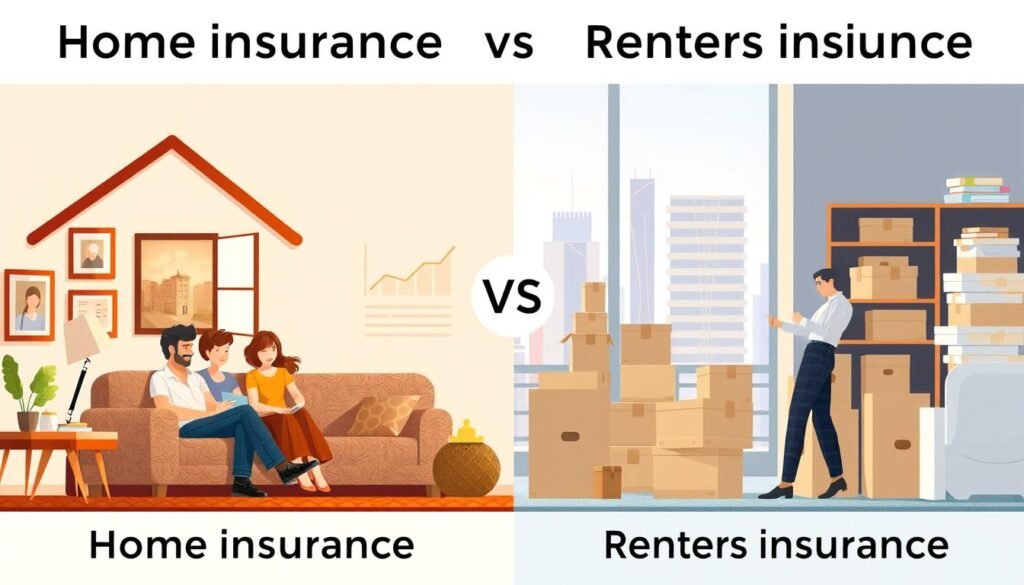
Did you know over 90% of homeowners in the U.S. have home insurance? But only 41% of renters have renters insurance? This shows a big difference between home and renters insurance. It’s important to know the differences, whether you own a home or rent one. Home insurance protects the home’s structure, your belongings, and you from lawsuits. Renters insurance, on the other hand, covers your personal stuff and you, but not the building itself. Knowing these differences helps you pick the right insurance for your situation. Key Takeaways Home insurance covers the home and your stuff. Renters insurance is for tenants, focusing on personal property. Understanding the differences is key to choosing the right policy. Homeowners usually pay more for insurance than renters. Liability coverage is included in both types of insurance. Understanding Home Insurance Coverage Home insurance is a key financial safety net. It protects your property from unexpected events. Knowing what a homeowners insurance policy includes is important. This helps you get the right coverage for your needs. What Does Homeowners Insurance Cover? A homeowners insurance policy covers many important things. This includes: Dwelling Coverage: It protects your home’s structure from damage like fire, wind, and vandalism. Contents Coverage: It covers your personal items inside the home, like furniture and electronics. Liability Protection: It helps if someone gets hurt or damages something on your property. Additional Living Expenses: It pays for living costs if you can’t stay in your home due to damage. Key Components of Home Insurance Policies It’s important to understand your home insurance policy. A typical policy has several parts like: Named Perils: It only covers specific risks listed in the policy. Open Perils: It covers all risks unless they’re excluded in the policy. Deductibles: This is the amount you pay before the insurance starts covering. Who Needs Homeowners Insurance? Anyone who owns a home needs insurance. It protects your investment and gives you peace of mind. Think about your assets and lifestyle to find the right coverage. Exploring Renters Insurance Benefits Renters insurance is a key safety net for those renting homes or apartments. Knowing what it covers can greatly improve a tenant’s financial security and peace of mind. It offers many benefits, helping renters protect their belongings and reduce risks. What Renters Insurance Protects This insurance mainly covers personal property against theft, fire, and vandalism. Here are the main parts of its coverage: Personal Property: It covers furniture, electronics, clothes, and more. Liability Protection: It helps protect against legal claims from injuries on the rental property. Additional Living Expenses: It helps with living costs if the rented space is not safe to live in. Why Renters Insurance is Important for Tenants Even though it’s not required by law, renters insurance offers a lot of peace of mind. It acts as a shield, protecting against financial loss. Getting renters insurance shows a commitment to safety and security. For many, it’s a smart way to protect personal items and avoid big risks. Renters insurance does more than just protect property. It adds stability and security to the rental experience. Home Insurance vs Renters Insurance: What’s the Difference? It’s important to know the differences between home and renters insurance. Both protect your personal property, but they cover different things and cost differently. Coverage Scope: Structural vs Personal Property Home insurance covers your home’s structure and your personal property. If your home is damaged by fire or storms, you’re protected. Renters insurance, on the other hand, only covers your personal belongings. It helps with losses like clothes, electronics, and furniture. This difference is key when comparing home insurance. It helps you choose the right coverage for your needs. Cost Comparison: Renters Insurance is More Affordable Renters insurance is cheaper, costing between $15 and $30 a month. Home insurance, which covers more, costs about $1,000 a year. This shows renters insurance is a more affordable option. It’s a good choice for those who want protection without spending a lot. Liability Coverage in Both Policies Both home and renters insurance have liability coverage. This protects you from legal claims if someone gets hurt or property is damaged. Home insurance usually has higher liability limits because owning a home comes with more financial risks. Understanding these differences is key to choosing the right insurance for you. Average Costs and Factors Affecting Premiums It’s important to understand insurance costs for homeowners and renters. Many factors affect premiums, leading to different insurance options. Knowing these factors helps in making smart choices about coverage and planning your finances. What Influences Home Insurance Costs? Home insurance costs vary based on several elements, including: Location: Homes in areas prone to natural disasters often face higher premiums. Home Condition: Newly built or well-maintained homes may benefit from lower rates compared to older properties. Coverage Amount: Higher coverage limits result in increased premiums, while lower limits create savings. Owner’s Credit History: A strong credit score may lower costs, as insurers often view responsible financial behavior favorably. Understanding Renters Insurance Cost Factors When exploring a renters insurance quote, several factors also come into play, such as: Value of Personal Belongings: The more valuable the items, the higher the coverage needed, impacting the premium. Location of the Rental Unit: Areas with higher crime rates can lead to increased costs due to perceived risks. Policy Deductible: Higher deductibles typically result in lower premiums, which might appeal to budget-conscious renters. Additional Coverage: Adding protections like liability or specific valuable items will influence the total cost. When Is Home Insurance or Renters Insurance Required? It’s important to know when you need home or renters insurance. This helps protect your belongings. Let’s look at what homeowners and renters need to know. Mandatory Coverage for Homeowners Homeowners usually need insurance when they get a mortgage. This makes sure the lender is safe if the property gets damaged. Home insurance covers things like fires, theft, and natural disasters. Having this insurance is key. It keeps your home safe and gives you peace of mind.
Common Home Insurance Claims: Preparation Guide

Did you know that nearly 1 in 20 homes with insurance file a claim each year? This shows that unexpected events can happen and lead to the need for common home insurance claims. Knowing how to handle homeowner insurance claims is key for every homeowner. It helps reduce stress and keeps your finances safe. In this guide, we’ll cover important parts of getting ready for home insurance. By understanding the types of coverage and common claims, you can better protect your home. The tips here will help you smoothly go through the claims process if you face losses. Let’s work together to build a strong financial foundation. Key Takeaways Understanding common home insurance claims is essential for financial preparedness. Proactive home insurance preparation can ease stress during claims events. Familiarize yourself with the homeowner insurance claims process to avoid unnecessary delays. Knowing your policy’s coverage can protect your home against significant losses. Accurate documentation and evidence are critical in filing successful claims. Regularly review and update your homeowner’s insurance policy as needed. For personalized help, consider getting a homeowner insurance quote. Understanding Homeowners Insurance Coverage Homeowners insurance is a key safety net for homeowners. It protects against risks that could harm your home, belongings, and even if someone gets hurt. Knowing what homeowners insurance covers is important for managing your finances and reducing risks. What is Homeowners Insurance? Homeowners insurance is a policy that guards against financial losses related to your home. It covers your home’s structure, your stuff, and liability claims. Having this policy can give you peace of mind, knowing help is there when you need it. Types of Claims Covered by Home Insurance Home insurance usually protects against various claims. Commonly covered claims include: Fire damage Theft or vandalism Storm-related damages, such as wind and hail Water damage from specific causes, like burst pipes Knowing what your policy covers helps you plan better and understand what to expect. Common Exclusions in Home Insurance Policies Even though many risks are covered, it’s key to know what’s not. Common exclusions include: Flood damage Earthquake damage Maintenance issues, like mold or pests Knowing these exclusions lets you take steps to get extra coverage if needed. Following tips for home insurance can improve your protection and ensure you’re fully covered. Common Home Insurance Claims and How to Prepare Homeowners often face challenges with common home insurance claims. Knowing how to prepare for these can help. It’s important to understand the types of damage that happen, how to assess them, and when to file a claim. Top Types of Claims Filed by Homeowners The most common claims include: Water Damage: This is from leaks or flooding. Fire Damage: Fires caused by unknown sources, like electrical issues. Wind Damage: Damage from storms to roofs or siding. Theft: Claims for stolen personal items. How to Assess Damage to Your Home Quickly assessing damage is key. Here’s how to do it: Take photos and notes of visible damage. Look for hidden damage, like in walls and floors. Check if damage poses a safety risk. This careful approach is important for filing claims. It helps support your case. When to File a Claim vs. Paying Out of Pocket Choosing whether to file a claim or pay out of pocket is tough. Consider these points: Compare repair costs to your deductible. If costs are less than your deductible, paying yourself might save money. Think about how claims might affect your future premiums. Too many claims could raise your rates. Consider the severity of the damage. For major damage, filing a claim might be necessary. Understanding these factors helps homeowners make smart choices. It ensures they pick the best option for repairs. Preparing for Home Insurance Claims: The Basics Getting ready for home insurance claims takes planning and detail. A good home inventory, solid documentation, and photos are key. These steps help us succeed in our claims and feel more confident. Creating a Home Inventory Making a home inventory is a must. It lists all important items in your home, like furniture and electronics. Here’s what to include: Name of the item Purchase date and price Brand and model Serial number Condition of the item Keeping your inventory current helps with claims. It shows the value of your belongings if something is lost. The Importance of Documentation and Receipts Good documentation is vital for insurance claims. Receipts, warranties, and appraisals prove your claim’s value. They help avoid payment disputes. Keep these documents safe but easy to find. Tips on Taking Photos and Videos of Damages Photos and videos are key for documenting damage. Here’s how to do it right: Take wide-angle shots to show the overall damage. Capture close-ups of specific areas that are affected. Ensure adequate lighting to highlight the extent of the damage. Include timestamps or dates on the photos to establish when the damage occurred. Record videos, narrating what is being captured to add context. Good photos and videos prove your claim. They give clear evidence for the insurance company to review. The Home Insurance Claims Process Explained Understanding the home insurance claims process can seem daunting. This is true, even when unexpected things happen. We will guide you through the essential steps to file a claim. You’ll learn how to interact with your insurance company and what to expect. Knowing this can help reduce stress and confusion when filing a claim. Steps to File a Home Insurance Claim When damage occurs, there are several key steps to file a claim effectively: Ensure your safety and the safety of others. Document the damage thoroughly through photos and notes. Review your policy to understand your coverage and deductibles. Contact your insurance company to report the incident. Fill out the necessary claim forms accurately. Keep records of all communications and documents related to your claim. Working with Your Insurance Adjuster After you initiate the claim, you will likely work with a claims adjuster. This professional assesses the damage to determine the appropriate compensation based on your
Essential Guide: Why Home Insurance Is Vital

Did you know that about 60% of American homeowners are underinsured? This fact shows how important homeowners insurance is. Owning a home is a big deal, but it also means you must protect it. This guide will help you understand why home insurance is key for homeowners. It’s vital for keeping your home safe and your belongings secure. We’ll look at the benefits of homeowners insurance. This will help you make smart choices about your coverage for peace of mind. Key Takeaways Understanding home insurance helps secure your financial future. Protect both your home’s structure and your personal belongings. Learn the benefits of adequate coverage to avoid being underinsured. Choosing the right policy tailored to your needs can provide peace of mind. Staying informed about the requirements may save you money in the long run. Understanding Home Insurance To understand the importance of homeowners insurance, we need to know what it is. Homeowners insurance protects against unexpected events like fires, thefts, or natural disasters. It helps us financially recover from these events, preventing big losses. Definition and Purpose The main goal of homeowners insurance is to offer financial support. This gives us peace of mind when unexpected things happen. It’s important to know about different policies to find the right one for us. Types of Home Insurance Policies There are many types of homeowners insurance policies. Knowing about them helps us pick the best one for our situation. Here are some common ones: HO-1 (Basic Form) HO-2 (Broad Form) HO-3 (Special Form) HO-5 (Comprehensive Form) HO-6 (Condominium Form) HO-7 (Mobile Home Form) HO-8 (Older Home Form) The HO-3 policy offers a lot of coverage, protecting against damage and liability. The HO-5 policy is the most complete, covering many incidents. Knowing about these types helps us make better choices for our insurance. Policy Type Coverage Description Best For HO-1 Basic and limited coverage Homeowners on a tight budget HO-2 Broad coverage for named perils Those seeking more than basic protection HO-3 Special form, covering most perils Typical homeowners with standard needs HO-5 Comprehensive coverage for property and personal belongings Homeowners wanting full coverage HO-6 Coverage for condominium units Condo owners HO-7 Mobile or manufactured home coverage Owners of mobile homes HO-8 Coverage for older homes at actual cash value Owners of historic homes Why Home Insurance Is Essential for Homeowners Owning a home is a big financial step. It means we must protect our investment. Home insurance is key to financial safety, easing worries about risks. It’s clear why homeowners need it to guard against unexpected damage. Protecting Your Financial Investment Our homes are often our biggest asset. It’s critical to protect this with home insurance. If disasters like fires or theft happen, insurance helps pay for repairs and replacements. Without it, we could face huge costs, leading to financial trouble. The Risks of Not Having Coverage Not having home insurance is risky. Without it, we’re open to financial dangers. Unexpected events can cause huge repair bills. This could lead to debt or even financial disaster, showing why coverage is so important. Key Benefits of Home Insurance Home insurance does more than just protect our money. It covers many important things. Let’s look at three key benefits: covering everything, protecting us from lawsuits, and helping with living costs if we can’t stay home. Comprehensive Coverage of Dwelling and Personal Property Comprehensive coverage is key in homeowners insurance. It keeps our homes safe from theft, fire, and bad weather. It also protects our stuff. This makes us feel safe and ready for surprises. Liability Protection for Homeowners Liability protection is a must for homeowners. It helps pay for medical bills or legal costs if someone gets hurt at our place. It keeps our finances safe and stable. Additional Living Expenses (ALE) Coverage If our home is too damaged to live in, ALE coverage helps a lot. It pays for temporary housing and other living costs. This way, we can stay comfortable even when things are tough. Exploring the Costs of Home Insurance Understanding home insurance costs is key to making smart choices. Many factors affect how much we pay for our premiums. Knowing these can help us manage our insurance costs and find the best policy for us. Factors Influencing Your Home Insurance Premiums Several important factors influence home insurance premiums: Home Value: The value of your home affects your premium. Higher-value homes cost more. Location: Homes in areas with natural disasters or high crime rates pay more. This is because they are riskier. Claims History: If you’ve made many claims, your premiums might go up. Insurers see this as a higher risk. Credit Score: Better credit scores can mean lower premiums. Insurers see you as a lower risk. Understanding Deductibles and Their Impact Deductibles are key in home insurance. They are the amount you pay before insurance covers you. A lower deductible means a higher premium, but you pay less out of pocket. A higher deductible lowers your premium but means you pay more before insurance kicks in. Choosing a deductible depends on your financial situation. It affects how ready you are and your monthly costs. Choosing the Right Home Insurance Provider Choosing a home insurance provider is key. It affects your home’s protection and your experience when making a claim. Look at several important factors when picking a provider. These include their reputation, customer service, claim handling, and coverage options. Evaluating Top Home Insurance Providers When looking at home insurance providers, focus on: Customer reviews and ratings from trusted sources. The variety of coverage options available, ensuring they meet your unique needs. How well they handle claims, as this will be vital in times of distress. The financial stability and reliability of the company. By focusing on these aspects, we can narrow down our options effectively, leading us to those who stand out among the top home insurance providers. How to Compare Home Insurance Quotes Comparing home insurance quotes is more than just looking at the price. It’s important
Home Insurance Guide: What Does It Cover?

Did you know that about 80% of U.S. homeowners don’t realize how much their stuff is worth? This can lead to a big gap in their home insurance. Knowing what home insurance covers is key to protecting your investment and making sure you’re safe from unexpected events. Home insurance is more than just a rule; it’s a vital financial shield that can prevent big losses. This guide will walk you through home insurance coverage. We’ll explore the benefits of a strong home insurance policy. And we’ll cover the important things every homeowner should know. Key Takeaways What does home insurance cover includes protection for the structure and contents of your home. Home insurance coverage can serve as a critical financial safety net in times of disaster. Understanding home insurance policy benefits helps ensure you obtain adequate coverage. Many mortgage lenders require proof of home insurance during the home buying process. Misestimating the value of your possessions can result in insufficient coverage. Understanding Homeowners Insurance Homeowners insurance is key to protecting our biggest investments. It covers financial losses related to our homes. Knowing how important it is helps us make smart choices. This way, we can avoid financial harm from unexpected events. Let’s explore what homeowners insurance includes. We’ll look at important terms and how to understand claims. This will help us grasp our policy details better. Definition and Importance Homeowners insurance protects our homes and personal items from risks like theft and fire. It’s vital for our financial safety. It helps cover repair or replacement costs from unexpected events. Every homeowner should understand this. A good insurance policy acts as a safety net. It keeps our assets and resources safe. Key Terms to Know Premium: The amount paid for the insurance policy, usually on a monthly or annual basis. Deductible: The out-of-pocket expense that must be paid before the insurance coverage applies in the event of a claim. Replacement Cost: The amount it would take to replace damaged property with similar new items, without deducting for depreciation. Liability Coverage: A component of the policy that protects against legal claims for injury or damage to others while on your property. Actual Cash Value: The cost to replace property minus depreciation, which may differ from replacement costs. What Does Home Insurance Cover? It’s important for homeowners to understand what their home insurance covers. Home insurance usually includes several types of coverage to protect against different risks. Knowing these categories helps us see the benefits of having the right coverage. Many things can affect what your home insurance covers. These factors can change the scope and limits of the protection. Standard Types of Coverage A typical home insurance policy has several key parts: Dwelling Coverage: This part protects the structure of our home from damage, giving us peace of mind. Personal Property Coverage: It covers our belongings inside the home, protecting our personal items from loss. Liability Coverage: This part helps with legal costs if someone sues us, covering expenses. Common Events Covered by Policies Home insurance policies often cover many common events. These include: Fire and smoke damage Theft or vandalism Weather-related incidents like windstorms and hail damage Liability for injuries on our property Dwelling Coverage and Its Importance Dwelling coverage is key in home insurance. It protects the physical part of our home. This includes walls, roofs, floors, and built-in appliances. It ensures our living space is safe from various risks. Knowing about dwelling coverage helps us understand our insurance needs better. It gives us peace of mind when damage happens. What Does Dwelling Coverage Include? This coverage usually covers: Damage from risks like fire, wind, or hail. Repairs for built-in appliances and systems, such as heating or plumbing. Coverage for extra structures like garages or decks. Coverage Limits for Dwelling It’s important to know about home insurance coverage limits. These limits show the most the insurance will pay for repairs or rebuilds after a loss. Several things affect these limits: The current market value of the home. The cost of local materials and labor. The size and features of the home. Choosing the right dwelling coverage means valuing our property right. It also means thinking about possible repair costs. Knowing about these limits helps protect our finances when unexpected things happen. Personal Property Coverage Explained It’s key to know about personal property coverage in a home insurance policy. This part helps protect our valuable stuff from theft, fire, or vandalism. By understanding what’s covered, we can choose the right insurance for our needs. What Personal Belongings Are Covered? Home insurance policies usually list what personal property they cover. They protect many items, like: Furniture and furnishings Electronics such as TVs and computers Clothing and personal accessories Jewelry, artwork, and collectibles (usually with specific limits) It’s important to check the policy for limits on expensive items. This helps us decide if we need extra coverage. For more details, look at the full home insurance policy details. Coverage While Off-Premises Many people don’t know that personal property coverage goes beyond their homes. Insurance can apply when items are taken elsewhere. Valuables like laptops and cameras might be covered while traveling. But, there are often limits, so it’s good to know what’s covered inside and outside the home. Liability Coverage: Protecting Your Finances Liability coverage is key for homeowners to protect their finances. It helps cover damages or injuries caused by household members to others or their property. Without it, unexpected events can lead to big expenses. What Liability Coverage Entails Liability coverage in home insurance policies includes several important parts: Medical expenses for injuries on our property Legal fees for defending against lawsuits Costs for repairing damages to others’ belongings Coverage limits that differ by policy Why Liability Coverage is Crucial This coverage is vital for financial protection. It helps avoid lawsuits and financial stress from accidents. It gives families peace of mind and security. Type of Coverage Description Typical Coverage Limits Medical Payments Covers minor injuries on your property $1,000
Why Life Insurance Reflects Love, Not Fear

Did you know about 60% of Americans don’t have life insurance? They often worry about the cost and how complicated it is. But, life insurance is really about showing love for our families. It’s not about fear, but about making sure they’re financially secure. Life insurance is like a safety net for our loved ones. It lets them keep living their lives even when we’re not there. It shows how much we care about their future. By getting life insurance, we’re putting our family first, showing we’re all in this together. Key Takeaways Life insurance is an expression of love and commitment to your family’s financial security. Understanding the importance of life insurance helps dispel misconceptions related to fear. Investing in life insurance provides long-term support for loved ones. Policyholders contribute to their family’s stability and peace of mind. Prioritizing family protection is a key motivation for purchasing life insurance. Understanding the True Purpose of Life Insurance Life insurance is more than just a policy. It shows our love and care for our families. It helps protect them from financial stress when we’re not there. What Life Insurance Means for Your Loved Ones Life insurance gives our families a solid base. It helps them manage costs like mortgages and school fees. This lets them live without worrying about money. It’s a big help during tough times. It lets families focus on healing, not just surviving. The Emotional Impact of Coverage Having life insurance brings peace of mind. It makes families feel safer and more supported. It turns hard times into moments of love and support. Life insurance shows our love and care for our families. It balances their emotional and financial needs. It’s a true sign of our dedication to them. Why Life Insurance Is About Love, Not Fear Life insurance is more than just a financial plan. It shows our deep love and care for those close to us. By getting life insurance, we tell our loved ones we care about their future. This choice helps them now and secures their future success. Life Insurance and the Message of Care Life insurance is about love, not fear. It sends a strong message of care. When we get a policy, we protect our loved ones’ future. This shows our commitment to their well-being and prepares them for the unexpected. Building a Legacy Through Financial Security Life insurance brings financial security, which is key to building a legacy. It helps future generations achieve their dreams without financial worries. By choosing this option, we make a lasting difference in their lives. For more information, check out how life insurance can help build a legacy. Life Insurance Benefits Beyond Financial Planning Life insurance does more than just help with money planning. It brings a mix of comfort and support to families in tough times. This helps families feel secure, knowing they have the support they need when it counts most. Peace of Mind for Families Life insurance offers a lot of comfort in uncertain times. It ensures bills get paid, kids get an education, and daily needs are met. This lets families heal and move forward without worrying about money. Creating Generational Wealth and Stability Life insurance is also key in building wealth for generations to come. It’s not just about a safety net; it’s about investing in the future. This way, we ensure our family’s financial security and legacy for years to come. It shows life insurance is more than a policy; it’s a dream for our family’s future. Opening Up Conversations About Family Protection Talking about life insurance is key to securing our loved ones’ futures. Choosing the right time for these talks is important. Holidays are great for this because they bring us together and make talking about money easier. By discussing life insurance during holidays, we make it clearer why it’s important. It shows we care for each other’s well-being. Why Holidays are Ideal for Discussing Financial Matters Holiday gatherings are perfect for these talks. They offer a warm setting for discussing sensitive topics. Here’s why: Everyone is together in a comfortable environment. Shared values and concerns can facilitate understanding. Opportunities for storytelling to illustrate experiences with family protection. Tips for Productive Family Discussions To have effective talks about life insurance, we need to be thoughtful. Here are some tips: Be open and honest: Share your thoughts and concerns candidly. Listen actively: Encourage family members to express their views and feelings. Align on objectives: Discuss goals for family protection to ensure everyone is on the same page. Be supportive: Acknowledge that these discussions can be challenging but are necessary for peace of mind. By following these tips, we can have meaningful talks about family protection. This helps everyone understand the value of life insurance. It’s a step towards a secure future for our families. Conclusion Life insurance is all about love, not fear. It’s a way to protect our families and ensure their financial security. It gives us peace of mind, knowing they are safe. Getting life insurance shows our love in a real way. It helps avoid financial worries and adds to our emotional support. It prepares our families for life’s ups and downs. Talking about life insurance helps us understand and care for each other more. Let’s see planning for our loved ones as a way to strengthen our bonds. It prepares us for a secure future together. FAQ What are the primary benefits of life insurance? Life insurance offers key benefits like protecting your family, securing their finances, and giving you peace of mind. It helps ensure your loved ones can keep their lifestyle and pay for important expenses after you’re gone. How does life insurance provide peace of mind? Life insurance gives you peace of mind by protecting your family’s finances. It means they’ll have the money they need to cover daily costs when times are tough. Can life insurance be seen as a way to build a legacy? Yes, life insurance can help