
Avoiding Common Home Insurance Mistakes Guide

Did you know that nearly 60% of homeowners are underinsured? This leaves them at risk of financial loss during unexpected events. Home insurance is a key financial safety net, protecting our homes and belongings. Yet, many homeowners make mistakes that lead to inadequate coverage. It’s vital to understand these common home insurance errors. We want to help you make informed choices. This way, you can avoid insurance mistakes that could harm your financial security. By focusing on full coverage and knowing the right and wrong ways of home insurance, we can protect our investments and peace of mind. Key Takeaways Many homeowners are underinsured, highlighting the need for complete coverage. Knowing common home insurance mistakes is key for financial safety. Good insurance protection comes from being aware and making smart choices. Understanding home insurance errors helps avoid financial risk. By following home insurance do’s and don’ts, we can protect our investments. Understanding the Importance of Home Insurance Home insurance is key to protecting our most valuable asset: our home. It helps us deal with unexpected events like theft, fire, or natural disasters. Without it, we risk losing money and facing financial hardship. It’s vital to understand how homeowners insurance works. It keeps our homes safe, our belongings secure, and our finances stable. What Home Insurance Covers Knowing what home insurance covers is the first step. Most policies include: Dwelling Protection: This covers damage to our home’s structure. Personal Property: It protects our belongings from theft or damage. Liability Coverage: This helps if someone gets hurt on our property. But, standard policies might not cover all disasters like floods or earthquakes. Getting extra coverage for these risks is important for full protection. Why It’s Essential for Homeowners Homeowners insurance is more than just a policy. It gives us peace of mind and lets us enjoy our homes without worry. It protects our homes, investments, and emotional well-being. By understanding home insurance, we make smart choices. We secure our homes and futures. Common Home Insurance Mistakes to Avoid Understanding the common pitfalls in homeowners insurance can greatly improve our protection. Many people fall into traps that lead to inadequate coverage or unexpected costs. Here, we’ll discuss key areas where home insurance errors often happen. Insuring at the Bare Minimum Choosing the minimum coverage required by law is a common mistake. This leaves homeowners vulnerable during unexpected crises, leading to significant financial hardship. It’s vital to assess our unique risks and choose coverage that offers adequate protection. Relying on Market Value Instead of Replacement Cost Many people base their insurance on their home’s market value, not its replacement cost. Using market value could mean not enough money for rebuilding if disaster strikes. Homeowners must ensure their policy covers the true cost of rebuilding, avoiding this error. Forgetting Additional Coverage Options Another common mistake is forgetting about essential additional coverage options. Flood and earthquake damage often need separate policies. Not considering these options can lead to big losses when disasters hit. We should look for complete coverage that meets our property’s diverse challenges. How to Customize Your Policy Effectively Customizing our home insurance policy helps us get the right protection for our needs. It starts with accurately assessing our property’s value. This way, we can cover our most valuable items well. Learning how to value our personal items is key. Exploring home insurance add-ons also helps us get the best coverage for our situation. Assessing Personal Property Value We start by making a detailed list of our belongings. We focus on high-value items, collectibles, and other special possessions. This careful step helps us accurately value our property. Knowing the true value of our items lets us choose the right coverage limits. We aim for actual replacement costs, not just market values. This is vital for protecting against loss. Add-ons You Might Need Home insurance add-ons can add extra protection to our policy. They cover things that standard policies might miss. Here are some add-ons to think about: Jewelry protection for items worth more than the standard policy limit. Sewage backup coverage to protect against plumbing problems. Earthquake insurance for homes in earthquake-prone areas. Flood insurance, even if our home isn’t in a flood zone, because it’s extra protection. Talking to our insurance provider about these options helps us create a policy that fits our lifestyle. It ensures our assets are well-protected. Taking Advantage of Discounts and Bundling Understanding the financial side of homeowners insurance can lead to big savings. Many homeowners miss out on chances to lower their premiums. Using common discounts for home insurance is a smart way to cut costs. Insurers offer discounts for things like security systems, smoke detectors, and certain professions. These features improve our safety and save us money. Common Discounts for Home Insurance It’s important to know about typical discounts from most insurance companies. Here are some examples: Installing a home security system. Using smoke detectors and fire alarms. Being a member of specific professional organizations or alumni associations. Having a claims-free history. Maintaining a solid credit score. Benefits of Bundling Insurance Policies Another way to save is through policy bundling. Combining homeowners insurance with auto or life insurance can bring big savings. This approach also makes managing our insurance easier. By bundling, we protect all parts of our lives under one policy. This gives us peace of mind and strengthens our protection plan. Conclusion Keeping our homes and belongings safe is very important. We need to know what to do and avoid common mistakes. This includes not having enough insurance and missing out on extra coverage. It’s key to understand our insurance policies well. This way, we can get the right amount of coverage for our needs. Knowing our policies helps us feel more secure and at peace. We should tailor our insurance to our personal situations. Using discounts and combining policies can help us get better coverage. It’s important for homeowners to keep their insurance up to date with their lives. By making smart choices,
Home Insurance vs Renters Insurance: Understand the Differences.
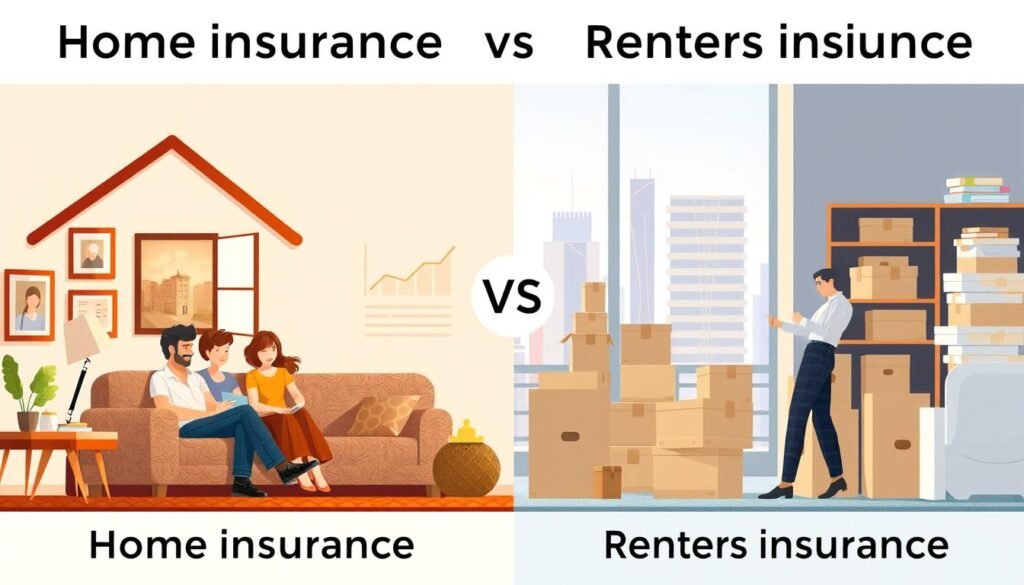
Did you know over 90% of homeowners in the U.S. have home insurance? But only 41% of renters have renters insurance? This shows a big difference between home and renters insurance. It’s important to know the differences, whether you own a home or rent one. Home insurance protects the home’s structure, your belongings, and you from lawsuits. Renters insurance, on the other hand, covers your personal stuff and you, but not the building itself. Knowing these differences helps you pick the right insurance for your situation. Key Takeaways Home insurance covers the home and your stuff. Renters insurance is for tenants, focusing on personal property. Understanding the differences is key to choosing the right policy. Homeowners usually pay more for insurance than renters. Liability coverage is included in both types of insurance. Understanding Home Insurance Coverage Home insurance is a key financial safety net. It protects your property from unexpected events. Knowing what a homeowners insurance policy includes is important. This helps you get the right coverage for your needs. What Does Homeowners Insurance Cover? A homeowners insurance policy covers many important things. This includes: Dwelling Coverage: It protects your home’s structure from damage like fire, wind, and vandalism. Contents Coverage: It covers your personal items inside the home, like furniture and electronics. Liability Protection: It helps if someone gets hurt or damages something on your property. Additional Living Expenses: It pays for living costs if you can’t stay in your home due to damage. Key Components of Home Insurance Policies It’s important to understand your home insurance policy. A typical policy has several parts like: Named Perils: It only covers specific risks listed in the policy. Open Perils: It covers all risks unless they’re excluded in the policy. Deductibles: This is the amount you pay before the insurance starts covering. Who Needs Homeowners Insurance? Anyone who owns a home needs insurance. It protects your investment and gives you peace of mind. Think about your assets and lifestyle to find the right coverage. Exploring Renters Insurance Benefits Renters insurance is a key safety net for those renting homes or apartments. Knowing what it covers can greatly improve a tenant’s financial security and peace of mind. It offers many benefits, helping renters protect their belongings and reduce risks. What Renters Insurance Protects This insurance mainly covers personal property against theft, fire, and vandalism. Here are the main parts of its coverage: Personal Property: It covers furniture, electronics, clothes, and more. Liability Protection: It helps protect against legal claims from injuries on the rental property. Additional Living Expenses: It helps with living costs if the rented space is not safe to live in. Why Renters Insurance is Important for Tenants Even though it’s not required by law, renters insurance offers a lot of peace of mind. It acts as a shield, protecting against financial loss. Getting renters insurance shows a commitment to safety and security. For many, it’s a smart way to protect personal items and avoid big risks. Renters insurance does more than just protect property. It adds stability and security to the rental experience. Home Insurance vs Renters Insurance: What’s the Difference? It’s important to know the differences between home and renters insurance. Both protect your personal property, but they cover different things and cost differently. Coverage Scope: Structural vs Personal Property Home insurance covers your home’s structure and your personal property. If your home is damaged by fire or storms, you’re protected. Renters insurance, on the other hand, only covers your personal belongings. It helps with losses like clothes, electronics, and furniture. This difference is key when comparing home insurance. It helps you choose the right coverage for your needs. Cost Comparison: Renters Insurance is More Affordable Renters insurance is cheaper, costing between $15 and $30 a month. Home insurance, which covers more, costs about $1,000 a year. This shows renters insurance is a more affordable option. It’s a good choice for those who want protection without spending a lot. Liability Coverage in Both Policies Both home and renters insurance have liability coverage. This protects you from legal claims if someone gets hurt or property is damaged. Home insurance usually has higher liability limits because owning a home comes with more financial risks. Understanding these differences is key to choosing the right insurance for you. Average Costs and Factors Affecting Premiums It’s important to understand insurance costs for homeowners and renters. Many factors affect premiums, leading to different insurance options. Knowing these factors helps in making smart choices about coverage and planning your finances. What Influences Home Insurance Costs? Home insurance costs vary based on several elements, including: Location: Homes in areas prone to natural disasters often face higher premiums. Home Condition: Newly built or well-maintained homes may benefit from lower rates compared to older properties. Coverage Amount: Higher coverage limits result in increased premiums, while lower limits create savings. Owner’s Credit History: A strong credit score may lower costs, as insurers often view responsible financial behavior favorably. Understanding Renters Insurance Cost Factors When exploring a renters insurance quote, several factors also come into play, such as: Value of Personal Belongings: The more valuable the items, the higher the coverage needed, impacting the premium. Location of the Rental Unit: Areas with higher crime rates can lead to increased costs due to perceived risks. Policy Deductible: Higher deductibles typically result in lower premiums, which might appeal to budget-conscious renters. Additional Coverage: Adding protections like liability or specific valuable items will influence the total cost. When Is Home Insurance or Renters Insurance Required? It’s important to know when you need home or renters insurance. This helps protect your belongings. Let’s look at what homeowners and renters need to know. Mandatory Coverage for Homeowners Homeowners usually need insurance when they get a mortgage. This makes sure the lender is safe if the property gets damaged. Home insurance covers things like fires, theft, and natural disasters. Having this insurance is key. It keeps your home safe and gives you peace of mind.
Home Insurance Guide: What Does It Cover?

Did you know that about 80% of U.S. homeowners don’t realize how much their stuff is worth? This can lead to a big gap in their home insurance. Knowing what home insurance covers is key to protecting your investment and making sure you’re safe from unexpected events. Home insurance is more than just a rule; it’s a vital financial shield that can prevent big losses. This guide will walk you through home insurance coverage. We’ll explore the benefits of a strong home insurance policy. And we’ll cover the important things every homeowner should know. Key Takeaways What does home insurance cover includes protection for the structure and contents of your home. Home insurance coverage can serve as a critical financial safety net in times of disaster. Understanding home insurance policy benefits helps ensure you obtain adequate coverage. Many mortgage lenders require proof of home insurance during the home buying process. Misestimating the value of your possessions can result in insufficient coverage. Understanding Homeowners Insurance Homeowners insurance is key to protecting our biggest investments. It covers financial losses related to our homes. Knowing how important it is helps us make smart choices. This way, we can avoid financial harm from unexpected events. Let’s explore what homeowners insurance includes. We’ll look at important terms and how to understand claims. This will help us grasp our policy details better. Definition and Importance Homeowners insurance protects our homes and personal items from risks like theft and fire. It’s vital for our financial safety. It helps cover repair or replacement costs from unexpected events. Every homeowner should understand this. A good insurance policy acts as a safety net. It keeps our assets and resources safe. Key Terms to Know Premium: The amount paid for the insurance policy, usually on a monthly or annual basis. Deductible: The out-of-pocket expense that must be paid before the insurance coverage applies in the event of a claim. Replacement Cost: The amount it would take to replace damaged property with similar new items, without deducting for depreciation. Liability Coverage: A component of the policy that protects against legal claims for injury or damage to others while on your property. Actual Cash Value: The cost to replace property minus depreciation, which may differ from replacement costs. What Does Home Insurance Cover? It’s important for homeowners to understand what their home insurance covers. Home insurance usually includes several types of coverage to protect against different risks. Knowing these categories helps us see the benefits of having the right coverage. Many things can affect what your home insurance covers. These factors can change the scope and limits of the protection. Standard Types of Coverage A typical home insurance policy has several key parts: Dwelling Coverage: This part protects the structure of our home from damage, giving us peace of mind. Personal Property Coverage: It covers our belongings inside the home, protecting our personal items from loss. Liability Coverage: This part helps with legal costs if someone sues us, covering expenses. Common Events Covered by Policies Home insurance policies often cover many common events. These include: Fire and smoke damage Theft or vandalism Weather-related incidents like windstorms and hail damage Liability for injuries on our property Dwelling Coverage and Its Importance Dwelling coverage is key in home insurance. It protects the physical part of our home. This includes walls, roofs, floors, and built-in appliances. It ensures our living space is safe from various risks. Knowing about dwelling coverage helps us understand our insurance needs better. It gives us peace of mind when damage happens. What Does Dwelling Coverage Include? This coverage usually covers: Damage from risks like fire, wind, or hail. Repairs for built-in appliances and systems, such as heating or plumbing. Coverage for extra structures like garages or decks. Coverage Limits for Dwelling It’s important to know about home insurance coverage limits. These limits show the most the insurance will pay for repairs or rebuilds after a loss. Several things affect these limits: The current market value of the home. The cost of local materials and labor. The size and features of the home. Choosing the right dwelling coverage means valuing our property right. It also means thinking about possible repair costs. Knowing about these limits helps protect our finances when unexpected things happen. Personal Property Coverage Explained It’s key to know about personal property coverage in a home insurance policy. This part helps protect our valuable stuff from theft, fire, or vandalism. By understanding what’s covered, we can choose the right insurance for our needs. What Personal Belongings Are Covered? Home insurance policies usually list what personal property they cover. They protect many items, like: Furniture and furnishings Electronics such as TVs and computers Clothing and personal accessories Jewelry, artwork, and collectibles (usually with specific limits) It’s important to check the policy for limits on expensive items. This helps us decide if we need extra coverage. For more details, look at the full home insurance policy details. Coverage While Off-Premises Many people don’t know that personal property coverage goes beyond their homes. Insurance can apply when items are taken elsewhere. Valuables like laptops and cameras might be covered while traveling. But, there are often limits, so it’s good to know what’s covered inside and outside the home. Liability Coverage: Protecting Your Finances Liability coverage is key for homeowners to protect their finances. It helps cover damages or injuries caused by household members to others or their property. Without it, unexpected events can lead to big expenses. What Liability Coverage Entails Liability coverage in home insurance policies includes several important parts: Medical expenses for injuries on our property Legal fees for defending against lawsuits Costs for repairing damages to others’ belongings Coverage limits that differ by policy Why Liability Coverage is Crucial This coverage is vital for financial protection. It helps avoid lawsuits and financial stress from accidents. It gives families peace of mind and security. Type of Coverage Description Typical Coverage Limits Medical Payments Covers minor injuries on your property $1,000