

Did you know that about 1 in 20 homes with insurance will face a damage claim each year? Home damage or loss is more common than you might think. Knowing how to handle it can make a big difference. Our guide will help you understand what to do after a loss, giving you the support and knowledge you need.
Experiencing home damage can be very tough emotionally. We aim to offer clear, helpful advice to guide you through recovery. By being prepared and making informed choices, we hope to make the recovery process clearer and more secure for you.
Key Takeaways
- Understanding common home damage events prepares you for possible risks.
- Quick actions after damage can greatly speed up recovery.
- Talking openly with your insurer is key for successful claims.
- Keeping records of damages helps in filing correct claims.
- Looking into temporary housing is vital for when you can’t stay home.
- Picking the right contractors ensures your repairs are done right.
Understanding the Scope of Home Damage
Homeowners face many challenges when dealing with home damage. Each type of damage has its own risks and needs attention. Knowing about these events helps us act wisely and stay safe. Let’s look at the common types of home damage and the risks they bring.
Types of Common Home Damage Events
Many events can cause serious damage to homes. Knowing these types helps homeowners prepare better. Here are some common home damage events:
- Flooding: Heavy rain or broken pipes can cause a lot of water damage.
- Wildfires: In wildfire-prone areas, homes are at risk of being destroyed, so prevention is key.
- Storm Damage: Severe weather can damage roofs, knock down trees, and break windows.
- Earthquakes: In areas with earthquakes, homes may have foundation and wall cracks that need checking.
- Vandalism: Intentional damage can happen anywhere, affecting a home’s safety and structure.
Assessing Immediate Risks After Damage
After a damage event, it’s important to check for risks before going back home. Homeowners should follow these steps:
- Check for structural integrity: Look for damage to walls, floors, and ceilings.
- Inspect for gas leaks: If you smell gas or hear hissing, get out and call emergency services.
- Examine electrical hazards: Don’t touch appliances or wiring, and turn off power if needed.
- Evaluate water damage: Look for standing water and damp spots that can cause mold.
By knowing about home damage types and checking for risks, we can take smart steps towards recovery.
What to Do After Home Damage or Loss
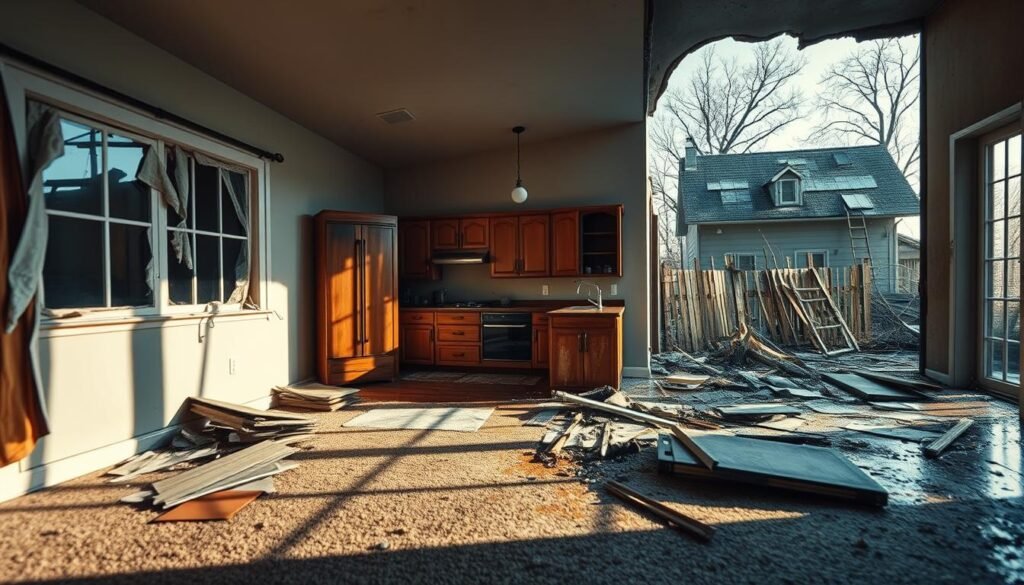
Home damage can be really tough to handle. Taking the right steps right away can help a lot. We need to focus on safety and start the recovery process. Knowing what to do after home damage helps reduce stress.
Initial Actions to Take
Safety first is key. If there’s a risk of more damage or injury, take these steps:
- Make sure everyone is safe and leave if needed.
- Turn off utilities to avoid more harm.
- Call emergency services if it’s a big risk.
- Find temporary housing if your home is not safe.
These steps are the first steps to manage the situation well.
Documentation of Damages
Next, it’s important to document damages for insurance claims. Good documentation is key for a smooth process. Here’s what to do:
- Make a list of damaged items, including what they are and their value.
- Take clear photos or videos of the damage, showing both wide shots and close-ups.
- Keep records of any immediate repairs or clean-up.
This documentation is vital for your insurance claim and getting the right compensation.
Contacting Your Insurance Provider
Acting quickly is key when you need to tell your insurance and lender about damage. Knowing what to do first can make the claims process easier. Start by getting all the important info ready. This includes details of the damage, photos, and your policy number.
This prep work helps you talk to your insurer more easily. It makes the next steps clearer and more efficient.
How to Notify Your Insurer and Lender
Notifying your insurance and lender might seem hard, but it’s easier with a plan. Here are some important steps:
- Call your insurance company using the number on your policy or their website.
- Tell them what happened and give them all the damage details.
- Let your lender know if your mortgage is involved, as they might need more from you.
- Save records of all your talks, like dates, times, and who you spoke with.
Importance of Open Communication with Your Insurer
Talking openly with your insurer is important. It helps you work together during the claims process. Regular talks clear up any doubts about your policy and what it covers.
By *talking to your insurer* often, you can:
- Get updates on your claim quickly.
- Answer any questions or worries about your coverage.
- Make sure you send all needed documents on time to avoid delays.
Knowing how to reach out and keep talking can make your claim process better. It helps you recover faster.
The Home Insurance Claim Process
Understanding the home insurance claim process is key. Knowing what your policy covers helps when you need to file a claim. Coverage limits show the most your insurance will pay. We’ll look at different types of coverage, like Additional Living Expenses, to help you make smart choices.
Understanding Coverage Types and Limits
Insurance policies have various types of coverage to protect against different risks. It’s important to know the limits of these coverages. Here are some common types:
- Dwelling Coverage: This protects your home’s structure.
- Personal Property Coverage: This covers your belongings inside your home.
- Liability Coverage: This protects you if someone gets hurt on your property.
- Additional Living Expenses: This helps with living costs if you can’t stay in your home while it’s being fixed.
Reviewing your policy will help you understand what’s covered and what’s not. This is key for a successful claim.
Filing Your Claim Effectively
Filing a home insurance claim involves several steps. First, document all damage details. Photos and lists of affected items are very helpful. Here’s how to file your claim:
- Call your insurer right away to report the damage.
- Give a detailed account of the damage and any repairs you’ve made.
- Send in all needed documents—photos, receipts, and estimates—quickly.
- Keep in touch with your claims adjuster as you go through the process.
Knowing the claims timeline helps manage your expectations and reduces stress. Being prepared makes the process smoother and increases your chances of a good outcome.
Temporary Living Arrangements
Home damage can make life tough, needing temporary living solutions. It’s key to know your options to keep life smooth and comfortable. You might stay with family, rent a short-term apartment, or book a hotel room. Each choice has its own pros and cons to think about.
Exploring Temporary Housing Options
Looking for temporary housing means considering a few things. Location, budget, and what you need are important. Here are some common choices:
- Staying with family or friends can save money and offer support.
- Furnished rentals offer privacy and a place to call your own.
- Hotels are great for quick stays when you need to be flexible.
Think about what’s best for your family and what you need before making a choice.
Understanding Additional Living Expenses Coverage
Knowing about your insurance’s additional living expenses coverage can be a big help. It helps pay for living costs while your home is being fixed. It’s important to keep track of all your expenses.
- Keep records of your temporary housing costs.
- Save receipts for any extra travel or food expenses.
Using this coverage can ease the financial burden of living elsewhere, making recovery easier.
Repairing and Rebuilding Your Home
Fixing your home after damage is a key part of getting back on track. It’s not just about making your home safe again. It’s also about choosing the right people to do the work.
Working with trusted professionals is important. They make sure your repairs are done right and with care.
Choosing the Right Contractor for Repairs
Finding the right contractor is vital for good repairs. Look for licensed and insured ones with a good track record. Getting quotes from different contractors helps you understand costs and what work will be done.
Look for signs of a professional contractor, such as:
- Positive customer reviews.
- Clear communication skills.
- Thorough, detailed estimates.
Talking to contractors in person can give you a better feel for their work. Trust your gut when deciding if they’re right for you.
The Importance of Keeping Detailed Documentation
Keeping detailed records is key during repairs. Document every step of the process and save all invoices and communications. This is very important.
- It helps keep everyone on the same page.
- It gives your insurance company what they need.
- It shows a clear record of the work done.
Being organized makes things run smoother. It can also help solve any problems later on.
Conclusion
Recovering from home damage is a detailed process. It starts with preparation, documenting everything, and talking openly. Knowing the types of damage and starting your insurance claim quickly are key steps.
Keeping detailed records and talking clearly with your insurance and contractors is vital. This makes the claim process smoother and protects you during repairs.
We hope this article helps you feel supported. Remember, you’re not alone in this tough time. Our aim is to help you rebuild your home and life with confidence and peace of mind.